
تبدأ معظم مشاريع RTLS بطلب غامض: "نحن بحاجة إلى تتبع في الوقت الفعلي".“
يبدو الأمر واضحاً حتى الاجتماع الأول للتصميم. الوقت الفعلي لأي غرض؟ لرافعة شوكية تتحرك داخل مستودع؟ لعامل يدخل منطقة محظورة؟ لمنصة نقالة تبقى ثابتة لثلاثة أيام؟ لحاوية تتحرك بين ساحة، وشاحنة، ومنطقة تحميل مغطاة؟
هنا تتعثر العديد من المشاريع. يطلب المشترون "دقة 10 سم" أو "تتبعًا مباشرًا" قبل تحديد ما يجب أن يثبته النظام فعليًا. والنتيجة مألوفة: بنية تحتية مفرطة في المناطق منخفضة المخاطر، وأداء ضعيف في المناطق الحرجة، ومشروع تجريبي يبدو جيدًا على الخريطة ولكنه صعب التشغيل.
تُعد اتفاقية مستوى الخدمة (SLA) الخاصة بالموقع نقطة انطلاق أفضل.
اتفاقية مستوى الخدمة (SLA) لنظام تحديد المواقع في الوقت الحقيقي (RTLS) هي تعريف مكتوب لما يعنيه "الموقع المناسب" لموقع محدد، ونوع أصل، وعملية أمان، وهدف بطارية. لا يمكنها ولا ينبغي لها أن تحل محل التصميم التقني، ولكنها تُسهّل عملية التصميم التقني.
لقد رأينا هذا كثيراً: الجزء الصعب نادراً ما يكون في وضع بطاقة التعريف. أما الجزء الصعب فهو الاتفاق على ما يجب أن تثبته هذه البطاقة.
ما هو اتفاقية مستوى الخدمة (SLA) لموقع RTLS؟
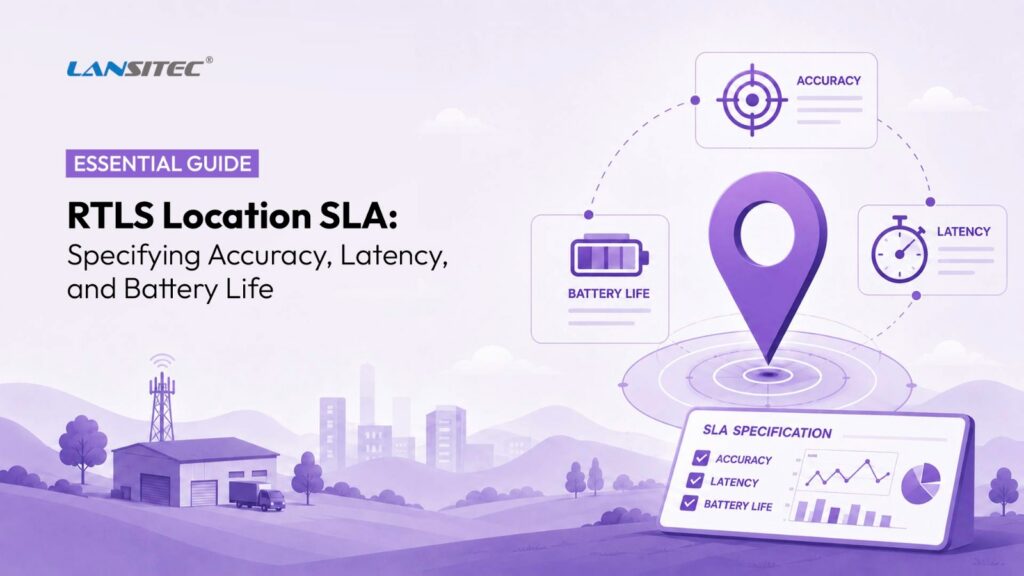
يجب أن تحدد اتفاقية مستوى الخدمة (SLA) الفعّالة للموقع الدقة، ومعدل التحديث، وزمن الاستجابة، ومستوى الثقة، وعمر البطارية، وافتراضات الخريطة، وأنماط الأعطال. هذه ليست تفاصيل تسويقية، بل هي الفرق بين نظام مقبول من قِبل قسم العمليات ونظام يُصبح استثناءً دائمًا. (1)
قد يبدو جدول اتفاقية مستوى الخدمة البسيط كالتالي:
| عنصر اتفاقية مستوى الخدمة | ما يحدده | مثال |
|---|---|---|
| دقة | ما مدى قرب الموقع المُبلغ عنه؟ | في نطاق 3 أمتار في مناطق المستودعات المفتوحة |
| معدل التحديث | عدد مرات قيام النظام بالإبلاغ | كل 5 ثوانٍ، أو 30 ثانية، أو دقيقة واحدة |
| كمون | مدى سرعة ظهور الحدث | يظهر التنبيه في غضون 10 ثوانٍ |
| ثقة | عدد مرات تحقيق النظام للهدف | 90 بالمائة من التقارير الصحيحة |
| هدف البطارية | العمر التشغيلي المتوقع في ظل الإعدادات المختارة | ستة أشهر، أو سنة واحدة، أو خمس سنوات |
| الاستثناءات | ماذا يحدث في المناطق العمياء أو في الظروف المتدهورة؟ | ذاكرة التخزين المؤقت، أو آخر موقع معروف، أو حالة عدم التوفر، أو الإنذار |
لاحظ ما هو مفقود: رقم دقة عالمي واحد.
هذا مقصود. فالمصنع الكيميائي والمستودع والمستشفى والنفق والميناء وموقع البناء لا تحتاج جميعها إلى نفس سلوك الموقع. تسمح اتفاقية مستوى الخدمة الجيدة بمستويات خدمة مختلفة حسب المنطقة.
كيفية تحديد متطلبات نظام تحديد المواقع في الوقت الحقيقي قبل اختيار التقنية
قبل اختيار الأجهزة، اكتب الجملة التشغيلية.
ملاحظة: "نحن بحاجة إلى النطاق العريض للغاية.”
الأفضل: "نحتاج إلى معرفة ما إذا كان أحد العمال قد دخل منطقة أمان الآلة، ويجب أن يظهر الإنذار في غرفة التحكم في غضون 10 ثوانٍ."“
ملاحظة: "نحن بحاجة إلى دقة 10 سم في كل مكان."“
الأفضل: "نحن بحاجة إلى تحديد المواقع على مستوى أقل من متر واحد بالقرب من المعدات الآلية، لكن الرؤية على مستوى الغرفة كافية في المكاتب وغرف التخزين ومناطق الاستراحة."“
هذا الأمر مهم لأن "الموقع" يمكن أن يعني عدة أشياء.
الكشف عن الوجود يعني ذلك أن النظام يعرف أن علامة أو شارة أو جهاز إرسال إشارة موجود بالقرب من بوابة أو مدخل أو غرفة أو نقطة تفتيش أو منطقة. وهو مفيد لتسجيلات الدخول والخروج، ومراقبة مستوى الغرفة، ومنطق السلامة البسيط.
- بليه RSSI يُقدّر نظام تحديد المواقع الموقع بناءً على قوة الإشارة المستقبلة. وهو عملي لتحديد المواقع الداخلية التقريبي، خاصةً عندما لا تتحرك الأصول باستمرار، ويمكن للنظام جمع عدة قراءات.
- يُعد نظام GNSS مناسبًا جدًا لتتبع المركبات والحاويات والمعدات المتنقلة في الهواء الطلق، ولكن لا ينبغي اعتباره طريقة موثوقة لتحديد المواقع الداخلية. (3)
- تعمل تقنية بلوتوث AoA على تحسين تحديد الموقع من خلال تقدير اتجاه الإشارة. وهي مفيدة عندما يحتاج الموقع إلى دقة أكبر من تقنية بلوتوث منخفضة الطاقة (BLE) القائمة على RSSI، ولكنه لا يزال يرغب في استخدام علامات بلوتوث أو منارات.
- النطاق العريض للغاية يُعد الخيار الأنسب عندما تبرر دقة تحديد المواقع الداخلية العالية المزيد من التخطيط حول نقاط التثبيت والمعايرة والهندسة والطاقة. (4)
ينبغي أن يفصل اتفاق مستوى الخدمة بين هذه الاحتياجات. لا تُجبر تقنية واحدة على حل جميع مشاكل الموقع.
كيفية تحديد متطلبات دقة نظام تحديد المواقع في الوقت الحقيقي (RTLS)
ينبغي كتابة الدقة بثلاثة أجزاء: المسافة، والاحتمالية، والمنطقة. (2)
ينص أحد المتطلبات الضعيفة على: "الدقة: 1 متر".“
وينص شرط أقوى على ما يلي: "في المنطقة أ، يجب أن يقوم النظام بالإبلاغ عن موقع الأفراد في حدود متر واحد لما لا يقل عن 90 بالمائة من التقارير الصحيحة بعد المعايرة، باستثناء النقاط العمياء المحددة وفترات الصيانة".“
تُعد تلك الجملة أكثر فائدة لأنها تحدد أين ينطبق الوعد، وكيف سيتم الحكم عليه، وما الذي يعتبر استثناءً.
بالنسبة لعمليات النشر على غرار Lansitec، من المفيد التفكير في فئات المواقع:
| فئات الموقع | المعنى العملي | الملاءمة النموذجية |
|---|---|---|
| الكشف عن الوجود | الجسم قريب من نقطة أو منطقة معروفة | مراقبة الدخول والخروج ومستوى الغرفة |
| بليه RSSI تحديد المواقع | الموقع الداخلي التقريبي | الأصول، الممرات، المستودعات |
| تحديد المواقع عبر نظام GNSS | موقع خارجي | ساحات، مركبات، حاويات |
| بلوتوث AoA | دقة أعلى تعتمد على الاتجاه | الأفراد، الأدوات، مناطق العمليات |
| النطاق العريض للغاية | تحديد المواقع الداخلية عالي الدقة | مناطق الأمان، والأتمتة، والأصول الحيوية |
الكلمة المفتاحية هي الملاءمة. تقنية بلوتوث منخفضة الطاقة (BLE) RSSI ليس فاشلاً النطاق العريض للغاية نظام GNSS ليس نظام تحديد المواقع في الوقت الحقيقي داخل المباني. النطاق العريض للغاية لا يُعدّ هذا بالضرورة الإجابة الصحيحة لكل عنصر مُصنّف.
غالباً ما يبدأ عملاؤنا بطلب أعلى دقة ممكنة. وبعد معاينة الموقع، يصبح السؤال الأهم عادةً: أين تُحدث الدقة العالية فرقاً في القرار؟
معدل تحديث نظام تحديد المواقع في الوقت الحقيقي مقابل زمن الاستجابة: ما الفرق؟
يختلف معدل التحديث عن زمن الاستجابة. معدل التحديث هو عدد مرات قيام الجهاز بالمسح الضوئي، أو الإعلان، أو الحساب، أو إرسال التقارير. أما زمن الاستجابة فهو المدة التي يستغرقها ظهور النتيجة في لوحة التحكم، أو نظام الإنذار، أو واجهة برمجة التطبيقات، أو منصة الطرف الثالث.
قد يدعم جهاز التتبع فترات إبلاغ قصيرة، لكن هذا لا يعني ظهور كل حدث على الفور. يعتمد زمن الاستجابة الشامل على إعدادات الجهاز، ونافذة المسح، وشبكة الاتصال اللاسلكي، وخادم الشبكة، ومنطق التطبيق، وتحديث لوحة التحكم.
اكتب كليهما في اتفاقية مستوى الخدمة.
على سبيل المثال:
| صياغة ضعيفة | صياغة أفضل لاتفاقية مستوى الخدمة |
|---|---|
| “"التتبع في الوقت الفعلي"” | “"يجب تحديث بيانات نقل الأصول كل 30 ثانية، مع تحديث لوحة المعلومات في غضون 10 ثوانٍ من استلام الخادم للبيانات."” |
| “"إنذار فوري"” | “"يجب أن تظهر أجهزة إنذار دخول المنطقة المحظورة في غرفة التحكم في غضون 10 ثوانٍ لـ 95 بالمائة من الأحداث الصحيحة."” |
| “"تتبع العمال المباشر"” | “"يجب أن يتم تحديث بيانات الموظفين كل 5 إلى 15 ثانية في المناطق عالية الخطورة وكل 60 ثانية في المناطق العادية."” |
يحمي هذا عمر البطارية وسعة الشبكة. قد يحتاج العامل القريب من مدخل مكان مغلق إلى تحديثات سريعة، بينما لا يحتاج إليها على الأرجح حامل البضائع الموجود في المخزن.
كيفية تحديد متطلبات عمر بطارية نظام تحديد المواقع في الوقت الحقيقي (RTLS)
عمر البطارية ليس بندًا منفصلاً في ورقة البيانات. إنه جزء من خدمة تحديد الموقع.
يختلف أداء الشارة التي تُعلن كل 100 مللي ثانية عن تلك التي تُعلن كل 800 مللي ثانية. كما أن جهاز التتبع الذي يستخدم نظام تحديد المواقع العالمي (GNSS) كل 30 ثانية لن يدوم طويلاً مثل جهاز يُبلغ كل 10 دقائق أو عند الحركة فقط. بوابة ذات اتصال مستمر استقبال البلوتوث سيستهلك طاقة أكبر من جهاز ذي نافذة استقبال أقصر.
لذا، اكتب وعد البطارية ضمن سياسة الإبلاغ الفعلية.
على سبيل المثال:
“"يجب أن تدعم الشارة شهر عمل واحد بين عمليات الشحن عند تهيئتها للإعلان عن الإشارات لمدة ثانية واحدة وتحديثات الموقع لمدة 30 ثانية في المناطق العادية."”
أو:
“"يجب أن يدعم جهاز تتبع الأصول التشغيل لمدة 12 شهرًا على الأقل عند الإبلاغ كل 10 دقائق أثناء الحركة ومرة واحدة يوميًا أثناء الثبات."”
وهذا يتجنب مشكلة شائعة في البرامج التجريبية: الإعدادات العدوانية تجعل العرض التوضيحي يبدو رائعًا، ثم يفشل الإنتاج لأن الشحن أو الاستبدال أو الصيانة تصبح غير واقعية.
لماذا تُعدّ خرائط نظام تحديد المواقع في الوقت الحقيقي ومعايرته مهمة؟
يعتمد نظام تحديد المواقع في الوقت الحقيقي (RTLS) على الخريطة.
بالنسبة لتقنية البلوتوث منخفض الطاقة (BLE) ونطاق الوصول (AoA) و النطاق العريض للغاية, بوابات, منارات, أو يجب وضع نقاط مرجعية في مواقع معروفة. إذا تحركت هذه النقاط المرجعية، فقد يظل النظام يُظهر نقطة، ولكن قد لا تكون هذه النقطة موثوقة.
ل النطاق العريض للغاية, تُعد معايرة المرساة مهمة بشكل خاص لأن محرك تحديد المواقع يحسب موقع جهاز التتبع من إحداثيات المرساة وقياسات المسافة. ب-ثابت بنى تقنية بلوتوث منخفضة الطاقة، ثابتة منارات كما يتطلب الأمر إحداثيات صحيحة. وينطبق المنطق نفسه على الأرضيات والجدران والمناطق المحظورة والعوائق والهياكل المعدنية الكبيرة.
أضف متطلبات الخريطة إلى اتفاقية مستوى الخدمة:
| متطلبات | مثال على الصياغة |
|---|---|
| التحكم في نقطة المرجع | “"يجب تسجيل إحداثيات البوابة والمنارة والمرساة بعد التثبيت."” |
| مناولة الأرضيات | “"يجب أن تستخدم المناطق متعددة الطوابق نقاط مرجعية خاصة بكل طابق أو منطق الارتفاع حيثما كان ذلك مدعومًا."” |
| التعامل مع العوائق | “"يجب وضع علامات على النقاط العمياء المعروفة، والحواجز المعدنية، والمناطق المسقوفة التي تحجب إشارات نظام تحديد المواقع العالمي (GNSS)، والغرف المحمية من الترددات اللاسلكية قبل اختبار القبول."” |
| التحكم في التغيير | “"أي حركة للمراسي،, بوابات, منارات, تتطلب الرفوف أو الآلات الكبيرة فحصًا للتحقق من الصحة.” |
قد يبدو هذا إجراءً روتينياً، ولكنه مهم. نحن نفضل نظام الخرائط لأنه يحول نظام تحديد المواقع في الوقت الحقيقي من مجرد أداة إلى بنية تحتية أساسية.
كيفية التخطيط لسيناريوهات فشل نظام تحديد المواقع في الوقت الحقيقي
لكل نظام تحديد مواقع أعطال. وتحدد اتفاقية مستوى الخدمة الجيدة هذه الأعطال قبل النشر.
بليه RSSI يمكن سماع الإشارات من الغرف المجاورة. قد تُضعف الجدران الإشارة، لكنها لا تحجبها تمامًا. كما يمكن أن يؤثر وجود الأشخاص والرطوبة والأثاث والهياكل المعدنية على هذه الإشارات. RSSI. يمكن أن تتدهور أنظمة الملاحة عبر الأقمار الصناعية (GNSS) تحت الأسطح، أو بالقرب من المباني، أو تحت الأرض. النطاق العريض للغاية يُحقق أفضل أداء عند فهم هندسة نقطة التثبيت وظروف خط الرؤية. وتعتمد زاوية الوصول على تثبيت البوابة بشكل مستقر ووضعها بعناية. (2)(3)
لا تخفي هذه الشروط. حدد ما يجب أن يفعله النظام.
| نمط الفشل | قرار اتفاقية مستوى الخدمة |
|---|---|
| لا يمكن لنظام تحديد المواقع العالمي عبر الأقمار الصناعية (GNSS) تحديد الموقع تحت السقف | قم بالتبديل إلى تقنية البلوتوث منخفض الطاقة (BLE) إن كانت متاحة، أو أبلغ عن آخر موقع معروف، أو حدد الموقع بأنه غير متاح. |
| تظهر إشارة بلوتوث منخفض الطاقة من الغرفة المجاورة | يستخدم RSSI تحديد العتبات، والمعايرة، والوضع الخاص بالغرفة، أو تصنيفها على أنها موجودة فقط |
| مذيعة UWB تم نقله | ضع علامة "غير مصدق" على المنطقة المتأثرة حتى إعادة المعايرة. |
| انقطاع الشبكة | قم بتخزين البيانات مؤقتًا حيثما كان ذلك مدعومًا، أو اعرض آخر طابع زمني معروف بوضوح. |
| البطارية منخفضة | تنبيه قبل أن ينخفض مستوى الجهاز عن الحد التشغيلي |
إن اتفاقية مستوى الخدمة التي تحدد التشغيل المتدهور أكثر مصداقية من تلك التي تعد بتتبع مثالي في كل مكان.
نموذج اتفاقية مستوى الخدمة لتحديد المواقع في الوقت الحقيقي (RTLS) للمشاريع الصناعية
قبل إرسال طلب عرض أسعار، حدد هذه العناصر:
| قسم | ماذا أكتب؟ |
|---|---|
| هدف العمل | ما القرار الذي يجب أن تدعمه بيانات الموقع؟ |
| الكائنات المتعقبة | أشخاص، مركبات، أدوات، منصات نقالة، حاويات، مفاتيح، زوار |
| فصول المنطقة | مناطق عالية الخطورة، مناطق عادية، مناطق تخزين، مناطق خارجية، نقاط عمياء |
| هدف الدقة | نصف قطر الخطأ ومستوى الثقة لكل منطقة |
| سياسة التحديث | فاصل الإبلاغ، فاصل المسح، منطق الحركة، التقارير التي يتم تشغيلها بواسطة الأحداث |
| هدف زمن الاستجابة | التأخير من الحركة أو الحدث إلى لوحة المعلومات أو واجهة برمجة التطبيقات أو الإنذار |
| هدف البطارية | العمر الافتراضي المطلوب في ظل التكوين المتفق عليه |
| افتراضات البنية التحتية | بوابات, ، المذيعين،, منارات, الطاقة، والربط الخلفي، والتركيب، والمعايرة |
| متطلبات الخريطة | ملفات التصميم بمساعدة الحاسوب، الإحداثيات، الطوابق، العوائق، التحكم في التغييرات |
| معالجة الاستثناءات | فقدان إشارة نظام تحديد المواقع العالمي (GNSS)، وضعف إشارة البلوتوث منخفض الطاقة (BLE)، وانقطاع الشبكة، وتغيير نقطة التثبيت، وانخفاض مستوى البطارية |
| اختبار القبول | كيف سيتم اختبار النظام قبل الموافقة النهائية؟ |
مثال قصير:
“في ممرات المستودعات، يجب وضع بطاقات تعريف الأصول على بُعد 3 أمتار في 90% من التقارير الصحيحة. تُحدَّث التقارير كل 60 ثانية أثناء الحركة وكل 10 دقائق أثناء الثبات. تظهر تنبيهات دخول المناطق المحظورة في التطبيق خلال 10 ثوانٍ. تُحدَّد النقاط العمياء المعروفة خلف هياكل التخزين المعدنية على الخريطة وتُستثنى من احتساب دقة التقييم. يجب ألا يقل عمر البطارية عن 12 شهرًا وفقًا للتكوين المعتمد.”
هذا واضح. وهو قابل للاختبار. ويمنح أقسام المشتريات والسلامة والعمليات والهندسة نفس التوقعات.
كيف تساعدك اتفاقية مستوى الخدمة لتحديد المواقع في الوقت الحقيقي (RTLS) على اختيار التكنولوجيا المناسبة
بمجرد كتابة اتفاقية مستوى الخدمة، يصبح اختيار الأجهزة أسهل بكثير. (3)(4)
- إذا نصّت اتفاقية مستوى الخدمة على "وجود على مستوى الغرفة"، فقد يكون استخدام بوابة بلوتوث منخفضة الطاقة أو بنية تعتمد على الإشارات كافيًا. لا تحتاج إلى تتبع دقيق على مستوى السنتيمتر لمعرفة أن عربة أدوات دخلت غرفة الصيانة.
- إذا نصت اتفاقية مستوى الخدمة على "من 3 إلى 5 أمتار في مستودع مفتوح"، فقد يكون التثليث بتقنية BLE كافيًا، خاصة بالنسبة للأصول التي تبقى في مكانها لفترة كافية حتى يتمكن النظام من جمع قراءات مستقرة.
- إذا نصت اتفاقية مستوى الخدمة على "تتبع الحاويات والمركبات الخارجية"، فسيتم استخدام نظام GNSS مع لوراوان, ، يصبح استخدام تقنية NB-IoT أو LTE-M أو Cat-1 للربط الخلفي أكثر أهمية.
- إذا نصت اتفاقية مستوى الخدمة على "موقع العامل تحت المقياس في منطقة تشغيل خطرة"، فإن زاوية الوصول بتقنية البلوتوث تستحق دراسة جادة.
- إذا نصت اتفاقية مستوى الخدمة على "وضع المعدات على مسافة تتراوح بين 10 و 30 سم حول المخزون عالي القيمة أو الروبوتات أو المعدات ذات الأهمية البالغة للسلامة"،“ النطاق العريض للغاية قد يبرر ذلك إضافة البنية التحتية.
ينبغي أن تتبع المحفظة اتفاقية مستوى الخدمة، وليس العكس.
أفضل الممارسات لكتابة اتفاقية مستوى الخدمة لموقع نظام تحديد المواقع في الوقت الحقيقي (RTLS)
لا يشتري مشتري أنظمة تحديد المواقع في الوقت الحقيقي (RTLS) عادةً العلامات أو نقاط التثبيت., بوابات, أو لوحات المعلومات. إنهم يشترون نتيجة الموقع.
يرغبون في العثور على الأصول بشكل أسرع. تقليل وقت البحث. إثبات دخول العمال إلى المناطق المحددة أو خروجهم منها. تحسين الاستجابة للطوارئ. حماية المعدات ذات القيمة العالية. تقليل عمليات العد اليدوي. فهم معدل الاستخدام. تجنب الجدال مع خريطة لا يثق بها أحد.
يتطلب تحقيق هذه النتيجة اتفاقية مستوى خدمة مكتوبة. ابدأ بالدقة، وزمن الاستجابة، والثقة، وعمر البطارية، وجودة الخريطة، ونمط الأعطال. ثم اختر التقنية. قد تبدو أبطأ في البداية، لكنها عادةً ما تجعل التجربة أكثر سلاسة، والتكلفة أكثر واقعية، والتنفيذ النهائي أسهل في الدفاع عنه. وبصراحة، فهي تضمن الشفافية للجميع.
الأسئلة الشائعة
حول اتفاقية مستوى الخدمة لموقع RTLS
ما هو اتفاقية مستوى الخدمة (SLA) لموقع RTLS؟
أن اتفاقية مستوى الخدمة لموقع RTLS هو تعريف مكتوب لكيفية أداء نظام تحديد المواقع في الوقت الفعلي في بيئة محددة. وهو يحدد عادةً الدقة، ومعدل التحديث، وزمن الاستجابة، ومستوى الثقة، وعمر البطارية، ومناطق التغطية، ومتطلبات الخريطة، ومعالجة الاستثناءات.
هل الدقة بمقدار 10 سم ضرورية دائمًا؟
لا. قد يكون نظام بدقة 10 سم مفيدًا للأتمتة، ومناطق الأمان عالية الخطورة، والتحكم في الأصول ذات القيمة العالية. في كثير من الحالات، يكفي وجود شخص على مستوى الغرفة، أو تحديد موقع الأصل على بُعد 3 إلى 5 أمتار، أو تتبع نظام الملاحة العالمي عبر الأقمار الصناعية (GNSS) في الهواء الطلق.
ما الفرق بين معدل التحديث وزمن الاستجابة؟
معدل التحديث هو عدد مرات إرسال النظام للتقارير. أما زمن الاستجابة فهو المدة التي يستغرقها ظهور هذا التقرير أو التنبيه في التطبيق أو لوحة التحكم أو واجهة برمجة التطبيقات.
هل ينبغي تتبع الأشخاص المتحركين باستخدام تقنية التثليث بتقنية البلوتوث منخفض الطاقة (BLE)؟
يعتمد ذلك على الدقة المطلوبة وسرعة التحديث. تقنية البلوتوث منخفض الطاقة (BLE) RSSI يمكن أن يكون التثليث فعالاً في العديد من سيناريوهات الأصول، ولكن قد يتطلب الأفراد سريعو الحركة بنية تحتية أكثر كثافة، وإعدادات مختلفة، وتقنية بلوتوث AoA، أو النطاق العريض للغاية في المناطق عالية الخطورة.

 English
  ไทย
ไทย  한국어
한국어  Français
  Deutsch
  Español
  日本語
日本語  العربية
  Italiano
  Português