


Helmet Sensor in Construction Sites
Construction sites are dynamic and potentially hazardous environments where knowing the location of every worker is critical to safety and efficiency. Lansitec’s Helmet Tracker, equipped with GNSS and Bluetooth capabilities, provides real-time location tracking of construction workers. This feature not only enhances safety by ensuring all personnel are accounted for, especially in emergency situations, but also helps in monitoring worker attendance and movement, thereby optimizing workflow and resource allocation.
Installation on the Smart Helmet:
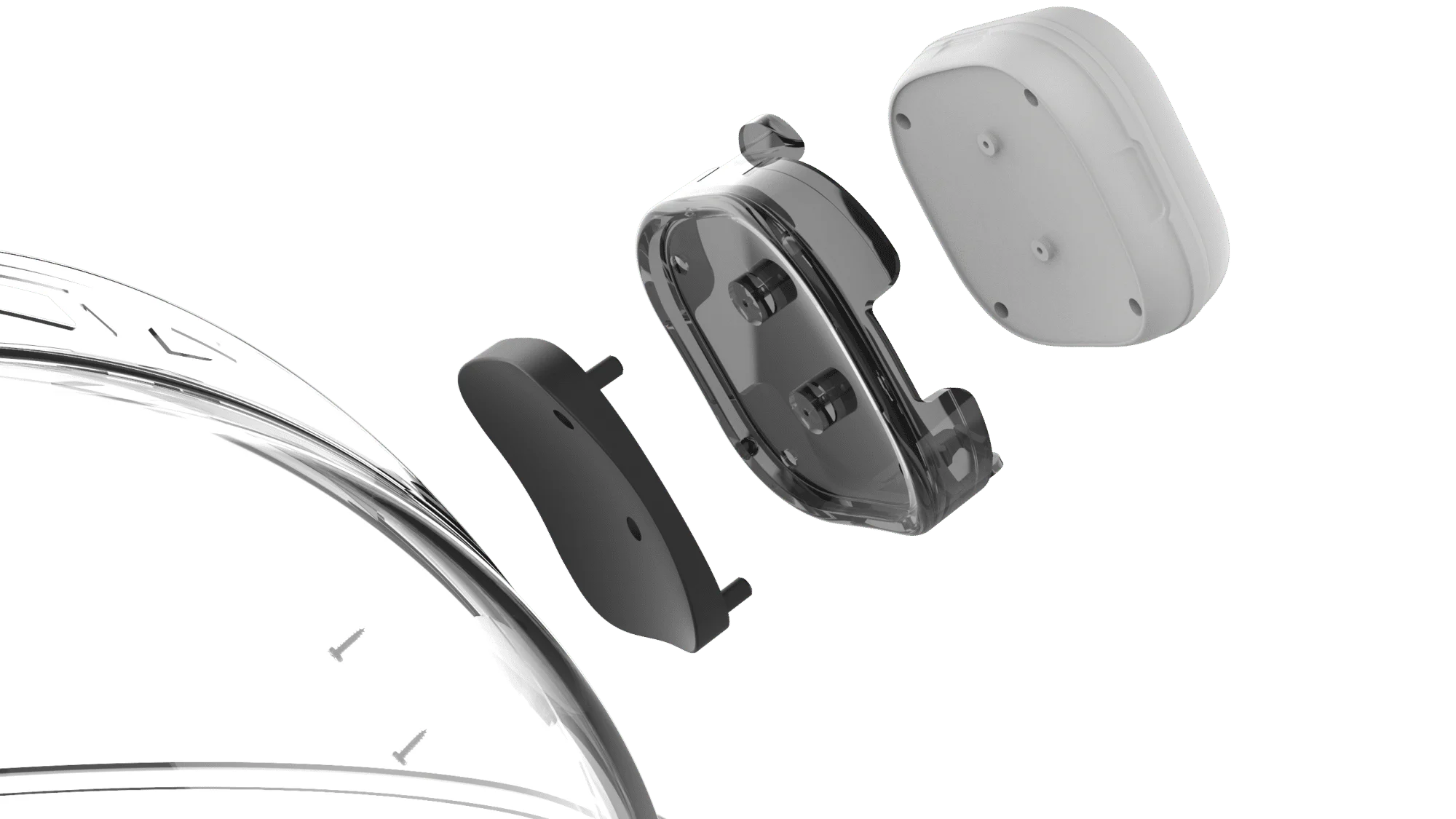
Using our B-Mobile® Solution:
Implementación: Each construction worker wears a helmet equipped with a Sensor de casco Lansitec. This sensor acts as a mobile beacon. Puertas de enlace Bluetooth are installed at strategic points around the construction site. These puertas de enlace are fixed and collect data from the sensores as workers move around.
Real-Time Data Handling: As workers move within the range of different puertas de enlace, their position data, collected via BLE, is transmitted back to a central server through the LoRa network. The server calculates and updates the real-time positions of each worker, providing vital data for safety monitoring and operational management.
Ventajas: Provides dynamic, real-time tracking as workers move across various areas of the construction site, both indoors and outdoors. This enables quick response to accidents or emergencies by pinpointing the exact location of workers.
Desventajas: The mobile nature of the helmet sensor means that regular battery checks and replacements are necessary to maintain functionality. Also, the effectiveness of the system is contingent upon the placement and range of the Puertas de enlace Bluetooth.

B-Fixed® Solution:
Implementación: Fijado balizas are deployed throughout the construction site. Each worker’s helmet sensor receives signals from these fixed balizas, determining the worker’s location based on the strength of the signal (RSSI) and triangulation methods.
Continuous Data Transmission: Location data is continuously sent to a central server via LoRaWAN or NB-IoT, allowing for constant site monitoring. Enables setting up specific geo-fenced zones, sending alerts if workers enter hazardous or restricted areas.
Ventajas: Provides accurate location tracking that is crucial for enforcing safety zones and responding to emergencies. Less prone to interference or signal loss as the balizas are fixed and strategically placed for optimal coverage. Once installed, the system requires minimal maintenance, and fixed balizas typically have a longer battery life than mobile sensores.
Desventajas: Requires careful planning and installation of fixed balizas throughout the site, which can be costly and time-consuming. Adjusting the system to changes in the site layout or expanding the covered area can be challenging and may require additional hardware.

Resumir con IA
Abre el servicio seleccionado en una nueva pestaña con un mensaje predefinido.

 English
 ไทย
 한국어
 Français
 Deutsch
 日本語
 العربية
 Italiano
 Español de Chile
 Português (AO90)