
Comment les badges et passerelles BLE de Lansitec automatisent le décompte des évacuations, identifient les personnes disparues et aident les secouristes à réagir plus rapidement.
Un système de contrôle d'accès classique utilise des badges NFC pour suivre les employés. Il suffit de scanner sa carte à l'entrée du bâtiment pour que le système reconnaisse votre présence.
Installez une application sur un appareil comme une tablette et attribuez-la à une personne. En cas d'urgence, les personnes se rassemblent à un point de ralliement, leurs cartes sont scannées à nouveau et vous savez qui est présent et qui est toujours absent. Facile à mettre en œuvre, économique et intuitif. Votre système a été mis à jour (principalement par logiciel et appareils existants pour limiter les coûts) pour prendre en compte les évacuations d'urgence, n'est-ce pas ?
Puis l'alarme se déclenche.
Les gens se déplacent rapidement. Certains ont peur. D'autres oublient la procédure. Les entreprises suivent la foule. Les visiteurs peuvent ne pas comprendre les instructions. Un secouriste peut scanner deux fois la même personne et ne pas en voir une autre, cachée derrière un groupe. Dans un bâtiment doté de plusieurs salles de sécurité, de plusieurs secouristes et d'un tableau de bord unique, le problème s'aggrave rapidement.
C’est pourquoi ce type de système de sécurité d’urgence ne devrait pas dépendre de la capacité d’une personne à se souvenir de présenter un badge au pire moment possible.
Ainsi, pour l'un de ses clients, Lansitec a proposé une approche différente : le rassemblement d'urgence basé sur le BLE. Les personnes portent toujours un badge ou une étiquette d'identification, mais l'enregistrement devient automatique. passerelles Le système détecte les badges aux entrées des bâtiments, dans les salles de sécurité, les couloirs et autres zones clés. Le tableau de bord compare les personnes entrées dans le bâtiment avec celles ayant atteint une salle de sécurité désignée. Ce processus est automatisé et ne nécessite aucun scan, et peut être réalisé avec plusieurs appareils.
Qu'est-ce qu'un système de rassemblement d'urgence ?
Un système de rassemblement d'urgence comptabilise automatiquement les employés, les sous-traitants et les visiteurs lors d'une évacuation en comparant qui se trouvait à l'intérieur d'un bâtiment avec qui a atteint une zone sûre désignée.
Comment fonctionne le rassemblement automatisé d'urgence ?
Le rassemblement automatisé d'urgence utilise des badges BLE et passerelles pour détecter les mouvements de personnel lors d'une évacuation, éliminant ainsi le besoin de scanner manuellement les badges ou de faire des appels nominaux sur papier.
Pourquoi les systèmes de rassemblement d'urgence basés sur la technologie NFC échouent souvent lors des évacuations
La technologie NFC est utile. Il est important de le souligner. Elle est particulièrement adaptée aux actions contrôlées : contrôle d’accès, vérification d’actifs, identification, enregistrement des visiteurs, remise de matériel ou encore un processus de type “ contact ”. Si l’utilisateur est détendu, que l’interaction est intentionnelle et qu’il n’y a pas d’urgence, la NFC peut se révéler simple et fiable.
Le rassemblement d'urgence est différent.
Le système doit fonctionner même lorsque les gens sont en mouvement, distraits et parfois paniqués. Cela modifie les règles de conception. Le meilleur processus d'urgence est celui qui reste opérationnel même lorsque les personnes ne le sont plus. L'automatisation est essentielle !
| Exigence | Enregistrement NFC | Rassemblement BLE |
|---|---|---|
| Action de l'utilisateur | Appuyer ou scanner requis | Aucune action de la part du porteur |
| Charge de travail des intervenants | Scanner chaque personne manuellement | Consultez le tableau de bord et répondez. |
| Flux de foule | Peut créer des files d'attente dans les salles sécurisées | Les gens peuvent continuer à bouger |
| Logique des personnes disparues | En fonction de la personne qui a effectué le scan | En fonction des personnes détectées |
| Contexte de localisation | Principalement basé sur le balayage par points | Possibilité d'ajouter les dernières données de zone connues |
Le principal défaut de la NFC ne réside pas dans la technologie elle-même, mais dans sa dépendance à l'intervention humaine. Une personne doit approcher le dispositif, un intervenant doit le scanner, et l'événement doit être correctement enregistré. Lors d'un exercice de simulation, cela peut être acceptable. En revanche, en cas d'incendie, de fuite chimique, de panne de courant ou d'incident de sécurité, le processus est fragile et comporte de multiples risques de défaillance humaine, même si la technologie est fiable et qu'il existe des mécanismes de secours.
Le Bluetooth Low Energy (BLE) modifie le modèle d'interaction. Un badge émet un signal. Une passerelle reçoit. La plateforme enregistre la présence en arrière-plan. C'est là le changement majeur : limiter les interactions humaines réduit le risque de perte de données !
Comment fonctionne le rassemblement d'urgence automatisé BLE
Le modèle B-Mobile de Lansitec s'adapte naturellement à ce cas d'utilisation. Dans cette architecture, Balises Bluetooth sont portés par des personnes ou attachés à des biens ; Passerelles Bluetooth sont déployées à des emplacements fixes ; et les données de balise reçues sont transmises au serveur via LoRaWAN, NB-IoT, LTE-M ou toute autre liaison de collecte configurée. Le moteur de suivi et le moteur cartographique prennent ensuite en charge les fonctions de localisation, de présence et de tableau de bord.
Pour les rassemblements d'urgence, on peut simplifier le concept en trois questions :
- Qui est entré dans le bâtiment ?
Passerelles Aux entrées, ils détectent les badges BLE et constituent la liste “ à l'intérieur ”. - Qui a atteint la sécurité ?
Passerelles Dans les salles de rassemblement, on vérifie les mêmes badges et on établit la liste des personnes “ comptabilisées ”. - Qui est porté disparu ?
La plateforme compare les deux listes et affiche l'écart.
Ce dernier point est important. Le tableau de bord ne doit pas se contenter d'afficher “ 3 personnes disparues ”. Il doit indiquer les noms ou les identifiants attribués aux personnes disparues, leur catégorie et, si l'infrastructure le permet, leur dernière zone de localisation connue.
Par exemple:
| Personne | Taper | Statut | Dernière détection |
|---|---|---|---|
| John D. | Employé | Manquant | Cage d'escalier B, 3e étage |
| Entrepreneur 118 | Entrepreneur | Manquant | Entrée de l'atelier 2 |
| Visiteur 042 | Visiteur | Manquant | point de contrôle du hall principal |
C’est là que le BLE commence à ressembler moins à un remplacement du NFC et plus à une couche de sécurité supplémentaire.
Architecture du système de rassemblement d'urgence BLE
Le matériel de base est simple : badges BLE portables, BLE fixes passerelles, un chemin de retour et un tableau de bord.
Balise Bluetooth B006 pour le suivi des employés, des sous-traitants et des visiteurs
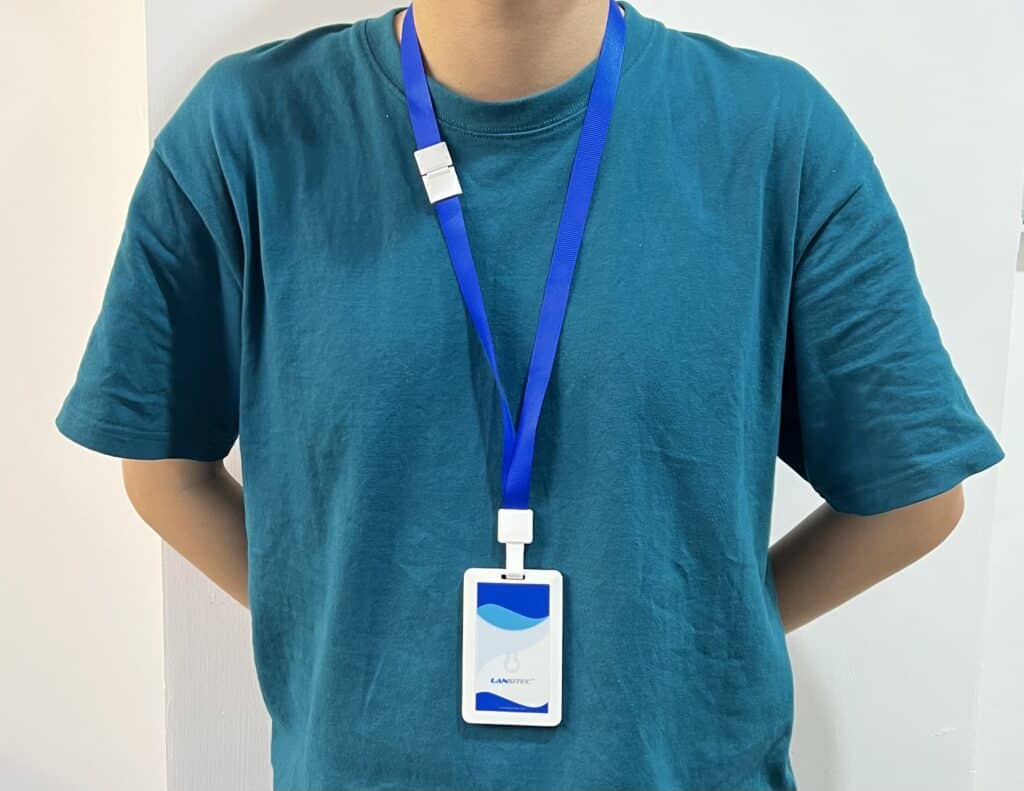
Pour la plupart des employés, des sous-traitants et des visiteurs, Balise Bluetooth Lansitec B006 Badge c'est le choix naturel.
Ce dispositif, de forme similaire à un badge, est facile à porter et conçu pour les applications d'identification. Il s'agit d'une balise BLE 5.0 mesurant 95 × 61 × 7 mm, dotée d'une batterie rechargeable de 600 mAh, d'intervalles de diffusion réglables de 100 ms à 5 s et d'une puissance d'émission de -20 dBm à +4 dBm. Elle offre une portée en visibilité directe jusqu'à 150 m et, en option, la prise en charge de l'angle d'arrivée (AoA) pour un positionnement plus précis lorsqu'elle est associée à une infrastructure AoA.
Dans ce projet, chaque badge peut être lié à un identifiant personnel sur la plateforme de sécurité :
- Nom et service de l'employé
- entreprise de construction
- nombre de visiteurs
- rôle d'urgence, le cas échéant
- bâtiment ou zone d'accès assignée
Cela signifie que le rapport de rassemblement n'est pas anonyme. Il est exploitable. Un intervenant ou un opérateur du centre de commandement peut voir précisément qui est porté disparu.
Passerelles BLE intérieures pour le rassemblement automatisé
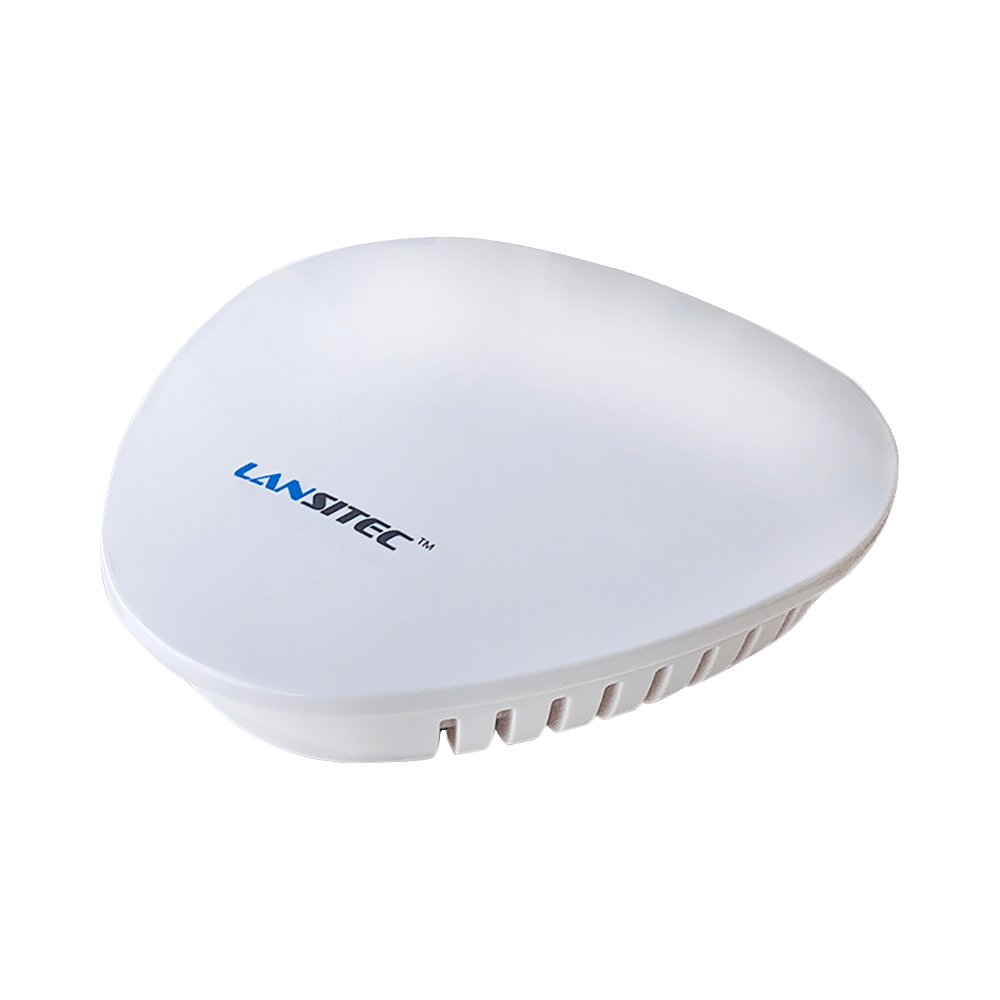
Le Passerelle Bluetooth intérieure Il s'agit du dispositif principal pour les entrées, les couloirs, les cages d'escalier, les halls d'ascenseur et les locaux de sécurité où l'alimentation électrique est disponible.
Son rôle est simple : recevoir les signaux BLE émis par les badges à proximité, transmettre les données pertinentes et permettre à l’application de déterminer si un badge se trouve dans une zone surveillée. Selon les recommandations de Lansitec pour B-Mobile, cette passerelle intérieure peut être utilisée pour le suivi et la collecte de données en intérieur, la portée de communication Bluetooth recommandée étant d’environ 10 à 30 mètres, en fonction des obstacles.
Pour le système d'urgence de base, nous installerions passerelles à:
| Emplacement | But |
|---|---|
| Entrées principales | Comptez le nombre de personnes entrant dans le bâtiment. |
| Sorties de secours | Détecter les personnes quittant les zones surveillées |
| portes de la salle de sécurité | Confirmer l'arrivée aux points de rassemblement |
| Couloirs et cages d'escalier | Ajouter le contexte du dernier déplacement connu |
| Salles de sécurité/de contrôle | Surveillance opérationnelle du soutien |
D'après notre expérience, l'emplacement d'une salle de sécurité mérite une attention particulière. Un portique de sécurité à l'intérieur de la salle peut confirmer une présence, mais un portique à l'entrée peut également aider à enregistrer l'heure d'arrivée. Pour une grande salle, deux portiques sont recommandés. passerelles Il pourrait y en avoir plusieurs. Cela dépend de la forme de la pièce, du matériau des murs et de la densité de l'affluence.
Passerelles Bluetooth Macro alimentées par batterie BLE pour sites industriels
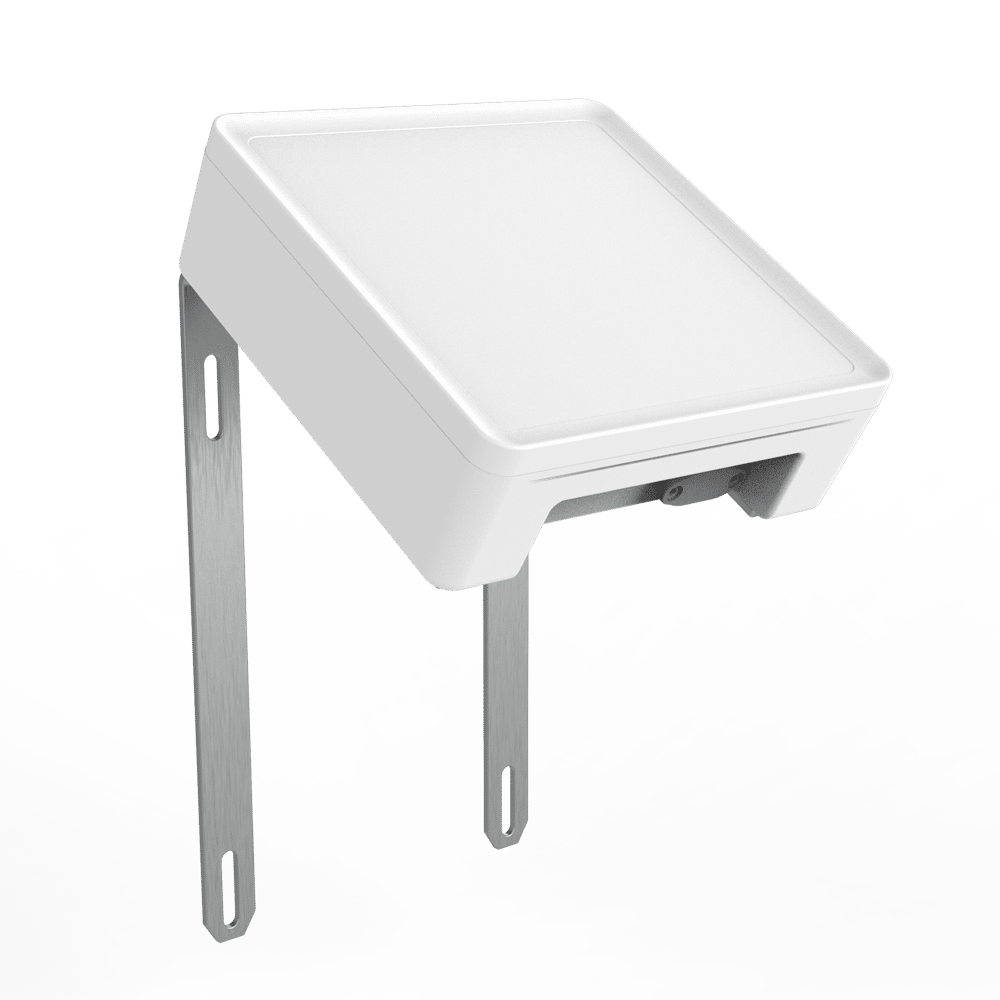
Le Macro Passerelle Bluetooth est utile lorsque le câblage est difficile.
Les sites industriels, les bâtiments anciens, les installations temporaires et les projets de rénovation comportent souvent des zones où l'ajout de courant est plus compliqué que l'installation de la passerelle elle-même. Passerelle Bluetooth offre à l'équipe de déploiement une option alimentée par batterie pour la collecte de données BLE à long terme. La solution de Lansitec propose un modèle avec une batterie de 38 000 mAh et un boîtier IP66., Bluetooth 5.0, LoRaWAN, des intervalles de rapport configurables et une prise en charge du positionnement en intérieur.
Cela en fait un choix idéal pour :
- itinéraires de rassemblement temporaires
- couloirs isolés
- entrepôts
- zones de services publics
- bâtiments en phase de construction
- zones industrielles où les travaux de câblage nécessitent des permis
Nous n'utiliserions pas de macro. passerelles Par défaut partout. Alimenté passerelles Les installations sont plus propres là où l'alimentation électrique est déjà disponible. Mais pour les endroits difficiles d'accès, le modèle Macro peut éviter à un projet le compromis habituel du “ on s'occupera de cette zone plus tard ”.
Passerelles BLE compactes pour déploiements pilotes et temporaires
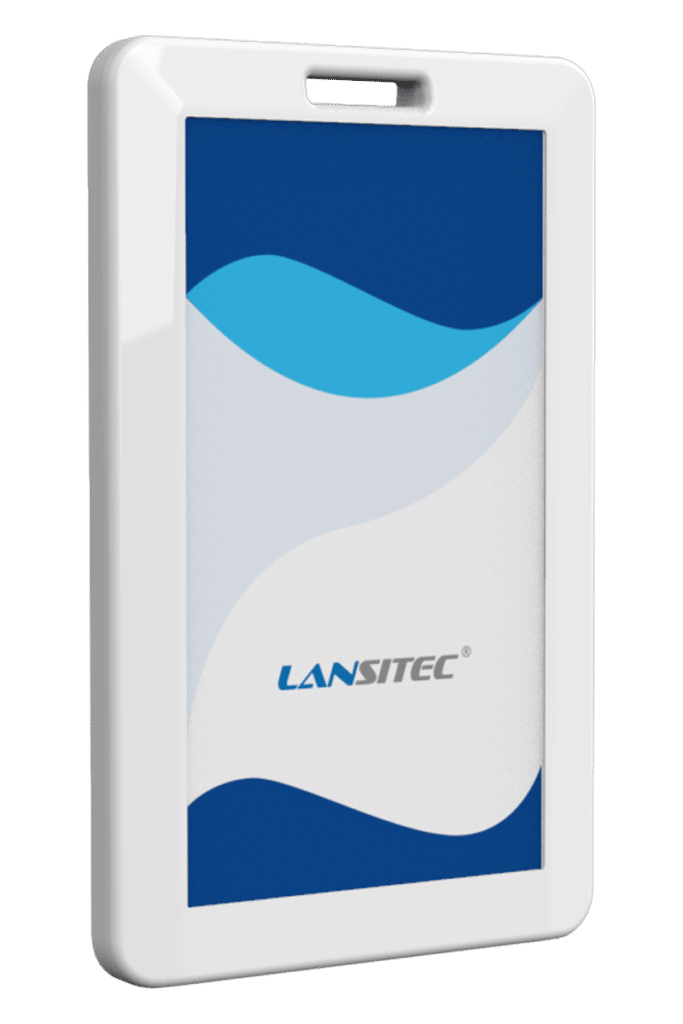
Le Passerelle Bluetooth compacte Il est utile pour les pilotes, les salles de sécurité temporaires, les zones d'accueil et les essais de validation de principe.
Dans un premier temps, un intégrateur peut tester le processus avec une entrée de bâtiment, deux salles de sécurité et un nombre limité de badges. Cela suffit généralement à valider la logique de contrôle d'accès avant de l'étendre à l'ensemble d'une installation.
Voici la voie pratique : prouver le comportement de détection, ajuster les intervalles de publicité, vérifier la logique du tableau de bord, puis étendre.
Utilisation de l'AoA BLE pour le suivi de haute précision du personnel d'urgence
Il ne faut pas surestimer l'importance de la couche passerelle BLE de base. Elle est idéale pour la détection de présence automatisée et le contrôle d'accès par zone. Elle peut indiquer qu'une personne a été détectée près d'une porte, dans une salle de sécurité ou dans un couloir.
Ce n'est pas la même chose qu'un positionnement précis en temps réel.
Pour les bâtiments à haut risque, la technologie de positionnement AoA de Lansitec peut être ajoutée dans certaines zones. Le positionnement BLE (Angle d'Arrivée) est idéal pour la localisation en temps réel, l'historique des déplacements, les alarmes de disparition et de surpopulation, la recherche inversée et les procédures d'intervention rapide.
Cela offre à la solution une voie de mise à niveau simple :
| Couche | Ce qu'il offre |
|---|---|
| Rassemblement BLE de base | Qui est entré et qui a atteint la sécurité |
| Couverture étendue des passerelles BLE | Dernière pièce, couloir, cage d'escalier ou zone détectée |
| Couche AoA | Positionnement de plus haute précision dans les zones critiques |
Tous les projets n'exigent pas une précision d'angle d'arrivée (AoA). Pour de nombreux bâtiments, les deux premières couches représentent déjà une amélioration opérationnelle significative par rapport à la lecture NFC. Cependant, dans les usines, les aéroports, les complexes hospitaliers et les installations industrielles à haut risque, la couche de localisation supplémentaire peut réduire le temps de recherche.
Flux de travail d'évacuation d'urgence utilisant le rassemblement BLE
Voici la structure proposée pour un tel projet.
- Tout d'abord, le bâtiment est divisé en zones : entrées, zones de travail, zones visiteurs, cages d'escalier, sorties et locaux de sécurité désignés. Passerelles sont installées aux points où la détection est importante.
- Deuxièmement, chaque personne reçoit un badge BLE. Les employés peuvent utiliser les badges qui leur sont attribués. Les prestataires et les visiteurs peuvent recevoir des badges temporaires à leur arrivée. L'identifiant du badge est lié à un dossier personnel dans le tableau de bord.
- Troisièmement, le système fonctionne en continu en arrière-plan. Lorsqu'une personne entre dans le bâtiment, le portique d'accès détecte son badge. En cas d'urgence, la plateforme se bloque ou met à jour la liste des personnes présentes à ce moment précis.
Ensuite, les gens se dirigent vers les salles de sécurité.
Passerelles Dans chaque salle de sécurité, les badges entrants sont détectés automatiquement. Plusieurs intervenants peuvent être responsables de plusieurs salles, mais tous consultent le même tableau de bord. Plus besoin de parcourir les salles pour scanner les badges. Plus besoin de penser à valider.
Le tableau de bord affiche :
- Nombre total de personnes détectées à l'intérieur avant le déclenchement de l'alarme
- Nombre total de personnes recensées dans les salles de sécurité
- Personnes disparues par nom, identifiant, groupe ou entreprise
- Dernière zone détectée et horodatage, si disponibles
- Nombre de personnes dans les salles de sécurité et risque de surpopulation
Ce dernier point est facile à négliger. Dans un système à plusieurs pièces, la question n'est pas seulement “ qui manque à l'appel ? ”, mais aussi “ où se rassemblent tous les participants ? ”. Si une pièce est surchargée et une autre presque vide, l'équipe de contrôle doit en être informée.
Comment le BLE aide à localiser le personnel disparu en situation d'urgence
L'amélioration la plus précieuse est la dernière position connue.
Un déploiement BLE minimal pourrait simplement nous indiquer qu'une personne est entrée dans le bâtiment sans atteindre un local de sécurité. Utile, certes, mais encore trop général.
Ajouter passerelles Dans les couloirs, les cages d'escalier, les halls d'ascenseur et les pièces à risque, les recherches sont ciblées. Au lieu de fouiller tout le bâtiment, les secouristes peuvent commencer par : “ Dernière détection près de la cage d'escalier B à 14 h 07 ”. Il s'agit d'une approche très différente.
Nous devons néanmoins préciser notre affirmation. Avec une passerelle BLE standard détection de présence, Le système affiche les zones et les secteurs probables. Avec une infrastructure plus dense ou un angle d'arrivée plus important, sa précision s'affine. La détection ponctuelle convient au suivi approximatif au niveau d'une pièce, tandis que des méthodes de positionnement complémentaires permettent d'améliorer la précision de la localisation lors de déploiements planifiés.
Avantages des systèmes automatisés de rassemblement d'urgence
Les systèmes d'urgence échouent lorsqu'ils supposent le calme des personnes. La technologie NFC suppose une action délibérée. Le Bluetooth Low Energy (BLE) suppose un mouvement. C'est pourquoi le BLE est plus adapté aux rassemblements de population.
Les gens font ce qu'ils essaient déjà de faire : quitter la zone dangereuse et se rassembler dans la pièce désignée. Le système s'adapte à ce mouvement. Il compte, compare et signale les exceptions.
Pour une plateforme de sécurité d'urgence multi-pièces, cette solution est plus évolutive. Un tableau de bord unique permet de centraliser la gestion de plusieurs salles de sécurité ou bâtiments. La même infrastructure de badges peut ensuite prendre en charge les alertes de zones restreintes, le suivi des présences, la visibilité des prestataires, la surveillance des zones surpeuplées et l'analyse des déplacements. Le système est flexible et facile à adapter.
Un scan manuel vous donne un enregistrement. Un système de rassemblement BLE automatisé vous offre une vue d'ensemble de la situation en temps réel. Et en cas d'urgence, c'est bien là l'essentiel.
Oui, pour les commandes automatiques détection de présence et le comptage dans la salle de sécurité. NFC Elle peut encore être utile pour la délivrance de badges ou la vérification d'identité, mais elle ne doit pas constituer la principale méthode d'enregistrement d'urgence.
Foire aux questions
À propos du rassemblement d'urgence BLE
Est-ce utile uniquement en cas d'urgence ?
Non. La même infrastructure BLE peut prendre en charge la visibilité des sous-traitants, le suivi des présences du personnel, les alertes de zones restreintes, la détection des surpopulations et l'historique des déplacements.
Quel appareil Lansitec les utilisateurs doivent-ils porter ?
Pour le style d'identification rassemblement, le B006 Badge Balise Bluetooth C'est la solution idéale. Elle est portable, configurable, rechargeable et permet de lier chaque badge à une carte d'identité personnelle.
Que se passe-t-il lorsqu'il y a plusieurs salles de sécurité ?
Chaque pièce dispose de sa propre zone de couverture et de sa propre vue pour les intervenants, tandis que toutes les pièces sont centralisées sur un tableau de bord unique. La plateforme compare la liste complète des éléments présents dans le bâtiment avec toutes les détections des pièces sécurisées.
Le système peut-il indiquer précisément où se trouve une personne disparue ?
Une passerelle BLE de base peut afficher la dernière pièce, porte, couloir ou zone détectée. Pour une plus grande précision, l'infrastructure peut être étendue avec des passerelles plus denses. passerelles, BLE AoA, ou UWB dans certaines zones à haut risque.
Le BLE peut-il remplacer complètement le NFC dans les rassemblements d'urgence ?
Oui, pour les commandes automatiques détection de présence et le comptage des personnes dans la salle de sécurité. La technologie NFC peut encore être utile pour la délivrance de badges ou l'enregistrement d'identités, mais elle ne devrait pas constituer la principale méthode d'enregistrement d'urgence.
 English
  ไทย
ไทย  한국어
한국어  Français
  Deutsch
  Español
  日本語
日本語  العربية
  Italiano
  Português