

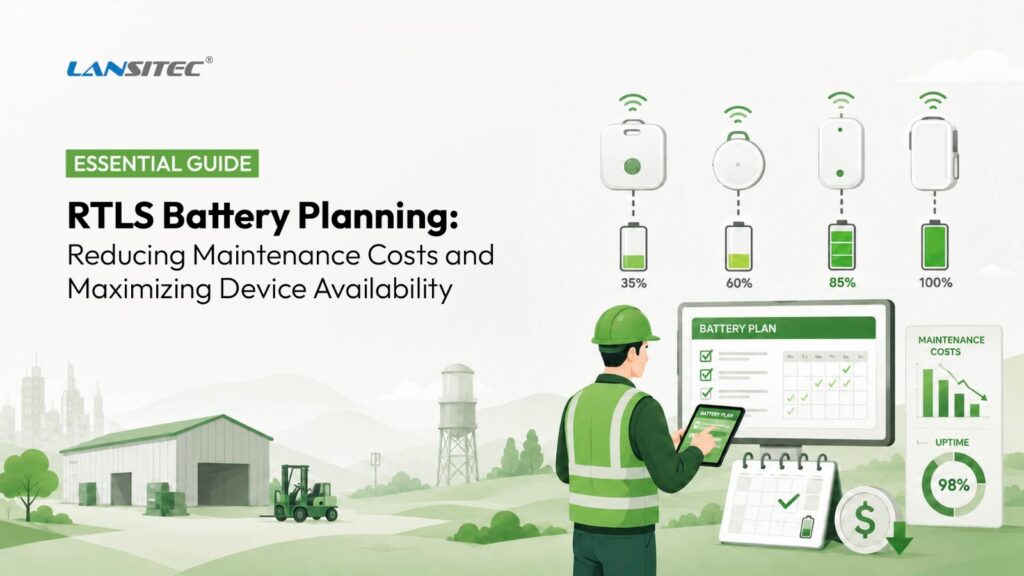
Die versteckten Betriebskosten für Batterien, Ladevorgänge, Solaranlagen und Ersatzgeräte
Ein Echtzeit-Ortungssystem (RTLS) kann in einem Pilotprojekt einwandfrei funktionieren und sechs Monate später dennoch enttäuschen. Die Software läuft, die Abdeckung ist gut, die Genauigkeit erfüllt die Anforderungen. Dennoch bleibt der Betrieb unübersichtlich, weil die Ausweise ungeladen in Schließfächern liegen, der Akku eines Remote-Gateways früher als erwartet leer ist oder keine Ersatzgeräte vorrätig sind.
Das sind die versteckten Betriebskosten von RTLS.
Die Akkulaufzeit ist wichtig, aber die Angabe im Datenblatt ist nur ein Faktor. Käufer benötigen außerdem ein Betriebsmodell: Wer lädt die Geräte auf, wann werden die Akkus ausgetauscht, wie viele Ersatzakkus werden vor Ort aufbewahrt und wie erkennt das System das nahende Ende der Akkulaufzeit?.
Was ist RTLS-Batterieplanung?
Die Betriebskosten (OPEX) von RTLS gehen über den Austausch von Zellen hinaus. Sie umfassen Arbeitskosten, Zugangskosten, Ausfallzeiten, Ladeinfrastruktur, Ersatzteillager, Transportkosten zu entfernten Anlagen und die Produktivitätskosten aufgrund fehlender Standortdaten.
Beginnen Sie mit der Trennung der vier Leistungsmodelle:
Warum die Batterieplanung bei RTLS für die langfristigen Bereitstellungskosten wichtig ist
| Leistungsmodell | Typische RTLS-Rolle | Hauptrisiko für Betriebskosten | Planungspriorität |
|---|---|---|---|
| Wiederaufladbar | Personalausweise, tragbare Ausrüstung | Geräte verpassen Schichten | Eigentumsrechte und Bearbeitungszeiten |
| Primärbatterie | BLE Leuchtfeuer, langlebige Etiketten | Große Ersatzwellen | Gestaffelter Austausch |
| Primärsystem mit hoher Kapazität | Fernbedienung Gateways, Vermögenswert Tracker | Teure Standortintervention | Überprüfung des Arbeitszyklus |
| Solarunterstützt | Außentore, Tracker | Saisonales Energiedefizit | Lokale Solarenergie und Reserve |
Wie sich der Arbeitszyklus auf die Akkulaufzeit von RTLS auswirkt
Die erste Frage bei der Beschaffung sollte nicht lauten: “Wie viele Jahre hält es?” Fragen Sie stattdessen: Unter welchem genauen Betriebsprofil?
Bluetooth ist ein einfaches Beispiel. Die Bluetooth SIG weist ausdrücklich darauf hin, dass das Werbeintervall einen Kompromiss zwischen Stromverbrauch und Geräteerkennungszeit darstellt. (1) Bei RTLS beeinflussen Aktualisierungsgeschwindigkeit, Bewegungserkennung, Sendeleistung, Scanfenster, GNSS-Fixes und Uplink-Frequenz die Arbeitslast.
Unser Portfolio und unsere Erfahrung zeigen, warum die Testbedingungen so wichtig sind. Der langlebige Bluetooth-Beacon mit zwei 1000-mAh-CR2477-Zellen ist für eine Lebensdauer von etwa fünf Jahren bei 0 dBm und einem Werbeintervall von 0,5 Sekunden spezifiziert. LoRaWAN-Tracking-Etikett Es verwendet eine 1800-mAh-Einweg-Lithiumbatterie und ist für einen Betrieb von über 3 Jahren mit 6 GNSS-Meldungen pro Tag ausgelegt. Ändern sich die Annahmen, ändert sich auch die Wartungsprognose.
Vor der Genehmigung einer Flotte sind folgende Daten zu erfassen:
- Melde-, Scan- und Werbeintervalle;
- Erwartete Bewegung im Vergleich zur Leerlaufzeit;
- Funkbedingungen und Annahmen zur Weiterleitung;
- Temperaturbereich und saisonale Exposition.
Wie man wiederaufladbare RTLS-Ausweise verwaltet
Wearables verursachen sichtbare Batterie-OPEX, weil der Mensch Teil des Prozesses ist.
Lansitecs LoRaWAN-Ausweis-Tracker Das Gerät verwendet einen wiederaufladbaren 600-mAh-Lithium-Ionen-Akku und gibt Warnungen bei niedrigem Akkustand aus. Die maximale Akkulaufzeit beträgt fünf Monate, diese kann jedoch nicht in allen GNSS-, Bluetooth-, Bewegungs- und Meldekonfigurationen garantiert werden. Für den Betrieb ist ein Ladeplan erforderlich.
Wiederaufladbare Batterien altern mit der Zeit durch Nutzung und Lagerung. Forscher des National Laboratory of the Rockies weisen darauf hin, dass Lebensdauermodelle Temperatur, Betriebszeiträume, Lade- und Entladeraten, Lagerbedingungen und Zyklenmuster berücksichtigen. (2)
Wem gehört der Ausweis am Schichtende? Kann ein Vorgesetzter sehen, welche Geräte nicht abgerechnet wurden? Was passiert, wenn zu Schichtbeginn mehrere Ausweise nicht verfügbar sind?
Die Ladekapazität muss der Flottengröße angepasst sein: eine USB-Ladestation mit 40 Ports, 350 W Leistung und 5-V-Ausgang. Bei einem Einsatz mit 500 Ausweisen wird sie Teil der Verfügbarkeitsplanung.
Verfolge die drei Pools separat:
- Im Einsatz: zugewiesen und zur Meldung verpflichtet.
- Im Gegenzug: Aufladen, Reinigen, Aktualisieren oder Neuzuweisen.
- Nicht verfügbar: beschädigt, fehlend, unter Quarantäne gestellt oder in Reparatur.
Addieren Sie diese Pools und ergänzen Sie sie um einen Notfallbestand. Ein Krankenhaus mit 24-Stunden-Übergaben, eine Acht-Stunden-Schicht in einer Fabrik und eine dreitägige Ausstellung erfordern unterschiedliche Verhältnisse.
Wie man RTLS-Batteriewechselzyklen plant
Primärbatterien entfallen zwar durch das tägliche Aufladen, können aber einen anderen Anstieg der Betriebskosten verursachen: Hunderte oder Tausende von Geräten erreichen im selben Quartal das Alter, in dem sie ersetzt werden müssen.
Stellen Sie sich 2.000 vor Leuchtfeuer Die Installation erfolgte in einem einzigen Rollout. Selbst bei einer Fünfjahresprognose beginnt die Wartungsplanung bereits am ersten Tag. Sind die Geräte für Techniker leicht erreichbar? Werden Ersatzteile rechtzeitig geliefert? Werden Batterielaufzeit und Geräte-IDs erfasst?
Wartungsarbeiten sollten gestaffelt nach Zone, Risikoklasse, gemessenem Batteriezustand oder geplantem Abschaltfenster durchgeführt werden, anstatt auf einen Massenausfall zu warten. Zusätzlich sollten die Batterietelemetrie und der Status “Zuletzt gesehen” überwacht werden. Ein fehlendes Tag kann auf ein defektes Gerät, ein Netzabdeckungsproblem, ein entferntes Gerät oder einen Netzwerkausfall hinweisen.
Eine lange Akkulaufzeit reduziert die Besuchshäufigkeit. Dadurch gewinnt jeder Besuch an Bedeutung.
Li-SOCl2-Batterien in RTLS: Vorteile und Grenzen
Lithiumthionylchlorid, üblicherweise Li-SOCl₂ abgekürzt, eignet sich für viele IoT- und RTLS-Geräte. Lansitec verwendet es in Produkte wie zum Beispiel das Makro Bluetooth-Gateway, Makro-Tracker, Container-Tracker und mehrere Ultrabreitbandige Breitbandtechnologie (UWB) Geräte.
Der Makro-Bluetooth-Gateway Es verwendet zwei 19.000-mAh-Akkus für eine Gesamtkapazität von 38.000 mAh. Laut Spezifikationen beträgt die Laufzeit 83 Monate bei einem Meldeintervall von fünf Minuten und insgesamt 720.000 Uplink-Meldungen. Container-Tracker Verwendet zwei 4.000 mAh Li/SOCl2-Batterien und listet ungefähr 16.000 GNSS-Positionierungsereignisse auf, wenn das Meldeintervall zehn Minuten überschreitet, oder ungefähr 36.000 Bluetooth-Positionierungsereignisse.
Diese Zahlen sprechen für die richtige Planungsmethode: Arbeitsbelastung zuerst, Kalender an zweiter Stelle.
Li-SOCl2 erfordert auch Kenntnisse über die Chemie. Die Passivierung trägt zwar zur Begrenzung der Selbstentladung bei, kann aber nach der Lagerung oder unter bestimmten Betriebsbedingungen zu einer vorübergehenden Spannungsverzögerung unter Last führen. Saft warnt davor, dass die Passivierung zu niedrigen Spannungswerten beim Start, Störungen bei anspruchsvollen Stromimpulsen oder zu irreführenden Anzeigen für einen niedrigen Batteriestand führen kann. (3) Käufer müssen keine Elektrochemiker werden. Sie sollten das Pulsprofil, die Lagerbedingungen, die Temperatur und das Gerätedesign überprüfen, anstatt sich allein auf die nominalen Amperestunden zu verlassen.
Auch für eingelagerte Ersatzteile ist eine Richtlinie erforderlich. Lagerdauer, Lagerbedingungen, Chargeninformationen und Rotation sollten dokumentiert werden.
Wie man solarbetriebene RTLS-Implementierungen plant
Solarenergie klingt nach dem Ende der Batteriewartung. Das ist sie aber nicht.
Eine Solaranlage vereint Erzeugung, Speicherung, Verbrauch, saisonale Schwankungen, Verschattung, Verschmutzung, Montagewinkel und Witterungseinflüsse. Die Gemeinsame Forschungsstelle der Europäischen Kommission stellt PVGIS-Tools für die Planung von Solarressourcen und Photovoltaik-Leistung bereit. Ihr netzunabhängiges Modell nutzt zeitlich variable Verbrauchs- und Solardaten, um den Energiefluss in und aus dem Batteriespeicher zu simulieren, einschließlich der Häufigkeit, mit der der Batteriespeicher leer wird. (4)
Die Lansitec Solar-Bluetooth-Gateway Kombiniert ein 3-W-Solarpanel mit einem wiederaufladbaren 5.300-mAh-Akku: ein Monat Dauerbetrieb bei Regenwetter unter einem definierten Profil: kontinuierlicher Bluetooth-Empfang und 60 Sekunden Laufzeit. LoRaWAN Meldeintervall. Das sind nützliche Daten zur Resilienz, aber keine universelle Garantie für jeden Breitengrad, Winter, Montageort oder Meldeort.
Prüfen Sie den Monat mit dem höchsten Energiegehalt, nicht den Jahresdurchschnitt. Achten Sie auch auf neue Verschattungen und Verschmutzungen. Beides kann die Energiebilanz unbemerkt verändern.
Wie viele Ersatz-RTLS-Tags und Gateways benötigen Sie?
RTLS-Käufer berechnen die Menge oft anhand der Karte: 800 Abzeichen, 1.500 Anlagenetiketten, 60 Gateways. Die Operationen sollten eine zweite Zahl berechnen: Wie viele Einheiten müssen auf Lager sein, um diese Mengen verfügbar zu halten?
| Ursache | Beispiel | Antwort |
|---|---|---|
| Energie | Abzeichen wartet auf Aufladung | Wendebecken |
| Versagen | Gehäuse defekt oder Batteriefehler | Ersatzteil bereithalten |
| Logistik | Ersatzteil unterwegs | Pufferbestand |
| Betrieb | Verloren, unter Quarantäne gestellt, versetzt | Kontingenz |
Die Lagerbestände hängen von der Ausfallhistorie, der Beschaffungszeit, der Zugangsschwierigkeit und der geschäftlichen Kritikalität ab. Bei einem zweitägigen Ereignis kann ein größerer Bereitschaftsbestand erforderlich sein; ein stabiler Betrieb benötigt bei kurzen Lieferzeiten möglicherweise weniger lokale Lagerbestände.
Eine hilfreiche Regel ist, die Ersatzteilmenge anhand der zugesicherten Wiederherstellungszeit zu dimensionieren. Muss ein defekter Mitarbeiterausweis vor der nächsten Schicht ersetzt werden, müssen Lagerbestand und Ladekapazität dies ermöglichen.
Warum die RTLS-Batterieplanung Teil Ihrer Service-Level-Vereinbarung sein sollte
RTLS-Service-Level-Agreements konzentrieren sich üblicherweise auf Genauigkeit, Latenz, Aktualisierungsrate und Verfügbarkeit. Hinzu kommt die Energieverfügbarkeit.
Schiene:
- Prozentsatz der zugewiesenen Tags, die wie erwartet gemeldet werden;
- Geräte unterhalb der definierten Batterieschwelle;
- maximale Zeit zum Ersetzen oder Aufladen eines Geräts;
- Reserveabdeckung in Tagen bei der beobachteten Verbrauchsrate.
Dadurch werden unerwartete Ausfälle von Tags zu einer Wartungsliste. Außerdem verbessert sich der Architekturvergleich. Ein günstiger Tag, der häufig bedient werden muss, kann über fünf Jahre teurer sein als ein teureres, langlebiges Gerät. Umgekehrt kann die Installation eines 38.000-mAh-Gateways an einem bereits vorhandenen Stromanschluss unnötige Batteriebestände verursachen.
Die beste Wahl hängt von der Zugänglichkeit, dem Arbeitsaufwand, den Berichtspflichten und den Folgen eines Scheiterns ab.
Die richtige RTLS-Stromarchitektur auswählen
Unsere Gerätepalette verdeutlicht ein allgemeineres RTLS-Prinzip: Man sollte nicht für jede Schicht ein einheitliches Leistungsmodell erzwingen.
Für Sammelstellen im Freien, Solar Bluetooth-Gateway Es verwendet ein 3-W-Panel und einen wiederaufladbaren 5.300-mAh-Akku. Für Orte ohne Stromversorgung, an denen eine sehr lange Akkulaufzeit wichtig ist, ist das Macro Bluetooth-Gateway Es verwendet eine 38.000 mAh Li-SOCl2-Konfiguration. Wiederaufladbare Abzeichen unterstützen die Wiederverwendung und warnen bei niedrigem Batteriestand. Sendungsverfolgungsetikett Verwendet eine Einwegbatterie und ein definiertes Niederfrequenz-GNSS-Profil. Container und Remote-Asset Tracker Um die Häufigkeit von Eingriffen zu reduzieren, sollen größere Primärbatterien verwendet werden.
Wir haben beobachtet, dass Käufer großen Wert auf Funkabdeckung und Positionsgenauigkeit legen. Verständlich. Sobald das System jedoch skaliert, wird die Energiearchitektur auch zur Betriebsarchitektur.
Das Ziel ist nicht maximale Akkulaufzeit überall. Es ist vorhersehbare Verfügbarkeit zu den niedrigsten realistischen Wartungskosten.
RTLS-Batterieplanungs-Checkliste
Vor dem Kauf sollten Sie einen Kostenvoranschlag für die Batteriekapazität Ihrer Konfiguration einholen. Dokumentieren Sie, wer für jede Wartungsmaßnahme verantwortlich ist. Prüfen Sie die ungünstigsten Temperatur- und Funkbedingungen. Dimensionieren Sie Ladegeräte und Ersatzteile anhand der erforderlichen Bearbeitungszeiten, nicht anhand von Schätzungen. Überwachen Sie außerdem Trends bei niedrigem Batteriestand und fehlenden Geräten als wichtige Leistungsindikatoren (KPIs).
Wenn man das tut, hört die Akkulaufzeit auf, eine reine Marketingzahl zu sein. Sie wird zu einem integralen Bestandteil der RTLS-Verfügbarkeit.
Häufig gestellte Fragen
Über die RTLS-Batterieplanung
Wie soll ich schätzen? RTLS-Batterielebensdauer?
Verwenden Sie den tatsächlichen Arbeitszyklus: Werbeintervall, Scan-Dauer, GNSS-Frequenz, Uplink-Intervall, Sendeleistung, Bewegungsmuster, Temperatur und Netzwerkbedingungen. Fragen Sie nach den Annahmen, die jeder angegebenen Lebensdauer zugrunde liegen. Die Bluetooth SIG-Richtlinien bestätigen, dass das Werbeintervall selbst einen Kompromiss zwischen Leistung und Erkennungszeit beinhaltet. (1)
Wie viele Ersatz-RTLS-Tags sollte ich aufbewahren?
Es gibt keinen allgemeingültigen Prozentsatz. Die Zahl sollte auf den beobachteten Verlust- und Ausfallraten, der Lieferzeit der Zulieferer, der Bearbeitungszeit für die Rechnungsstellung, der Reparaturzeit und der vom Betrieb zugesicherten Austauschzeit basieren.
Sind wiederaufladbare Namensschilder günstiger als Einweg-Ausweise?
Manchmal. Wiederaufladbare Geräte vermeiden zwar den wiederholten Austausch der Hauptbatterie, erfordern aber zusätzliche Ladestationen, mehr Aufwand für das Personal, Lagerumschlag, Verschleiß der Anschlüsse und das Risiko, dass der Ladevorgang unterbrochen wird. Vergleichen Sie die gesamten Betriebskosten über den geplanten Einsatzzeitraum.
Kann Solar Gateways Betrieb ohne Wartung?
Sie können das manuelle Laden reduzieren, sind aber weiterhin von der lokalen Solarenergie, dem saisonalen Wetter, der Ausrichtung, der Verschattung, der Sauberkeit, der Last und der Batteriereserve abhängig. Verwenden Sie standortspezifische Daten und testen Sie den ungünstigsten saisonalen Fall. PVGIS bietet hierfür die entsprechenden Werkzeuge. (4)
Warum kann ein langlebiges Li-SOCl2-Bauelement früher ausfallen als erwartet?
Mögliche Ursachen sind ein höherer Arbeitszyklus, Temperatur, hohe Impulslasten, Funkbedingungen, Lagergeschichte oder Systemschwellenwerte. Die Li-SOCl₂-Passivierung kann die Anlaufspannung nach der Lagerung oder unter bestimmten Lasten ebenfalls beeinflussen.[3] Überprüfen Sie das vollständige Geräteprofil, nicht nur die Nennkapazität.




 English
  ไทย
ไทย  한국어
한국어  Français
  Deutsch
  Español
  日本語
日本語  العربية
  Italiano
  Português