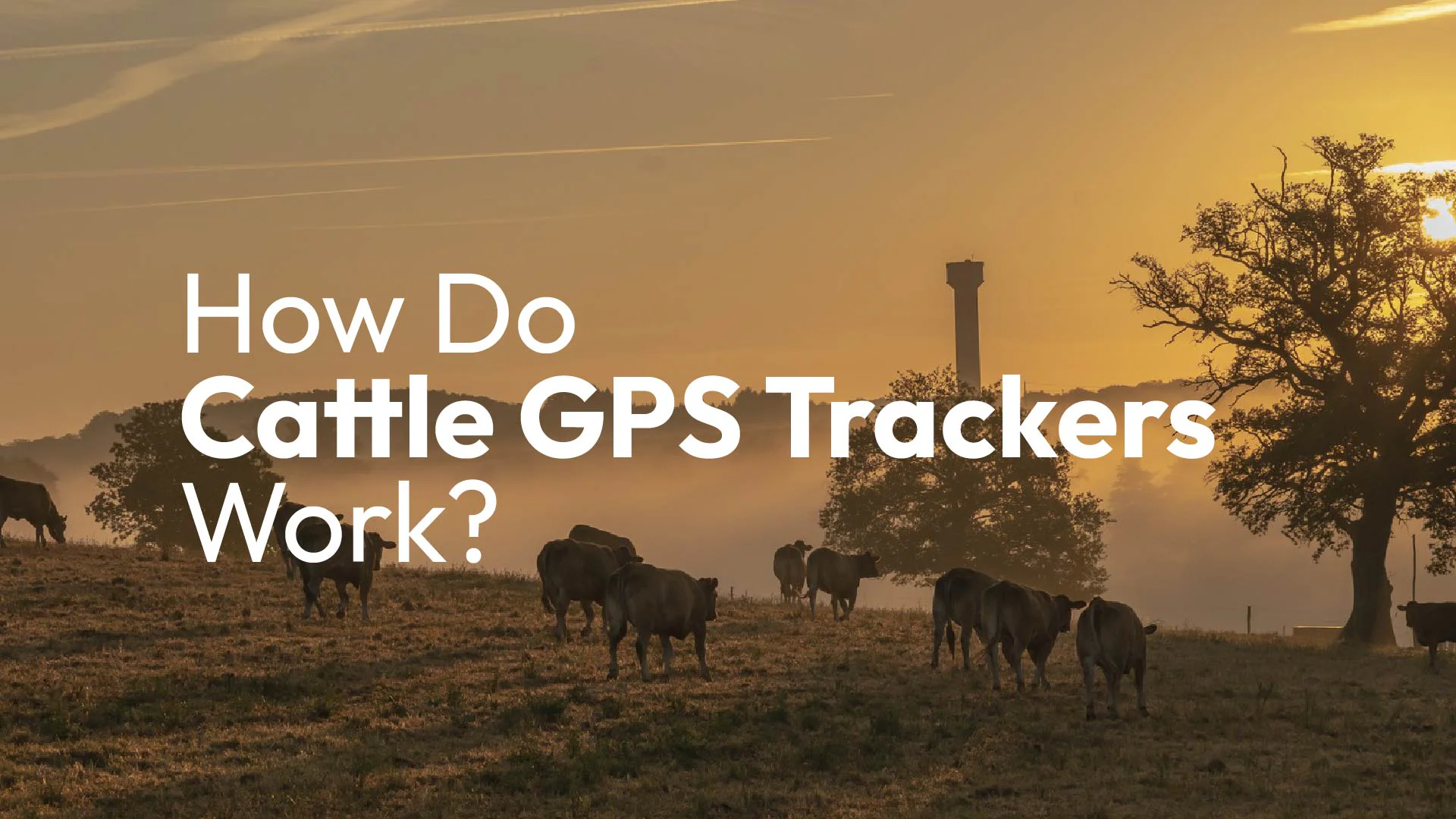
Have you ever wondered how ranchers keep track of hundreds of cattle spread across vast grazing lands? Losing sight of even a few animals can cause stress, financial loss, and hours of searching. That is where cattle GPS rastreadores come in. They give ranchers real-time visibility into their herd. They enable them to locate animals and monitor their movement in real time.
What is a Cattle GPS Tracker
At its simplest, a cattle GPS tracker is a small device attached to an animal that records its location and sends that data to a monitoring platform. Lansitec has designed advanced rastreamento de gado tags that combine precise GPS positioning with long-range wireless connectivity.
O Lansitec CAT‑1 Livestock Tracking Tag and the Lansitec NTN Livestock Tracking Tag can be used to track cattle across large areas with minimal human intervention. These rastreadores leverage GNSS (Global Navigation Satellite Systems) for location data and low-power wide-area networks for data transmission.
Key Components of the System
Here are the major components you will find in a modern livestock GPS tracker system:
GNSS Module → A built-in GNSS receiver captures the animal’s position with high accuracy. The Lansitec NTN tag uses this to deliver precise outdoor tracking and report locations at set intervals or when motion is detected.
Connectivity/Network → Once the device captures position data, it sends it through available networks. Lansitec’s NTN tag supports LTE Cat-1, NB-IoT + NTN, e LoRaWAN for strong coverage even in remote grazing areas.
Power & Hardware → Battery performance is vital for field rastreadores. O NTN tag uses a solar-powered rechargeable battery, while the CAT-1 tag runs on a 150 mAh Li-ion battery built for extended use.
Sensing and Alerts → These rastreadores do more than locate animals. The NTN tag includes sensores for step counting, stillness alerts, and chasing detection to monitor animal activity and safety.
How It Works in the Field
Here is a step-by-step view of how a cattle GPS tracker typically functions in ranch conditions:
- The tracker is attached to the cattle (via an ear tag, collar, or other mount) in a way that does not impede the animal’s movement or comfort.
- The GNSS module obtains a location fix when the animal moves or when the schedule demands.
- The sensing module monitors motion (for example, to identify grazing vs resting) or triggers if the animal leaves a predefined zone (geo-fence).
- The tracker uses a network modality (e.g., LTE Cat-1 or LoRaWAN) to transmit the location data and sensor alerts to the backend monitoring platform.
- On the backend, the ranch manager views the animal’s current and historical positions, receives alerts about unusual behaviour or zone breaches, and can adjust grazing strategies or respond to issues.
- The power system (battery and potentially solar recharge) supports long-term operation with minimal intervention. This allows the ranch to scale the system across many animals without daily maintenance.
Technical Highlights of Lansitec’s Tags
Here are some of the standout technical features of these Lansitec tags:
- O NTN tag supports three network options: Cat-1 (4G), LoRaWAN, e NB-IoT + NTN. This ensures connectivity even in remote or infrastructure-limited conditions.
- O NTN tag’s hardware: dimension 60 × 44 × 15 mm, weight 32 g, ingress protection IP66, operating temperature –10 °C to +65 °C.
- LoRaWAN sensitivity in the tag line is down to –137 dBm at SF12, BW125 kHz, providing long-range coverage even in rural environments.
- The CAT-1 tag boasts “Powered by a rechargeable 150 mAh Li-ion battery” capable of months of operation under demanding farm conditions.
- Both tags support geo-fencing, configurable uplink/reporting intervals, and flexibility for different tracking modes (grazing vs transport vs resting).
Benefits for Ranchers
Using such GPS rastreadores for cattle brings several clear benefits:
- You gain real-time visibility into animal location, helping reduce losses and improve security.
- Behavioural monitoring allows identifying animals that may be injured or isolated, thus enabling faster response.
- Geo-fence alerts mean that animals wandering outside the intended grazing area trigger notifications.
- Long battery life and remote communication mean a lower maintenance burden and the ability to scale across large herds.
- Multi-network and rugged designs ensure the system works in remote grazing lands that lack traditional infrastructure.
Conclusão
The technology behind cattle GPS rastreadores has advanced significantly. With the Lansitec CAT-1 and NTN rastreamento de gado tags, you get hardware designed for the farm environment, connectivity options that cover remote regions, and sensing capabilities that go beyond simple location reporting. Installing such a system gives you strong operational visibility, better herd management, and peace of mind.


 English
 ไทย
 한국어
 Français
 Deutsch
 日本語
 العربية
 Italiano
 Español de Chile
 Português (AO90)