
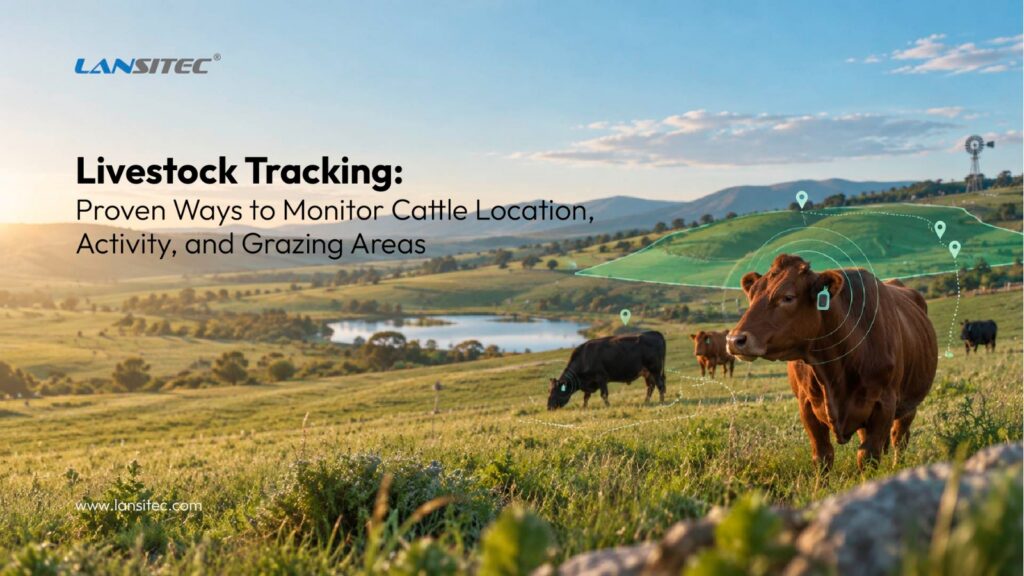
Managing cattle across large fields takes time. When an animal goes missing, stops following its normal routine, or fails to arrive at a milking station, the sooner you know, the sooner you can respond.
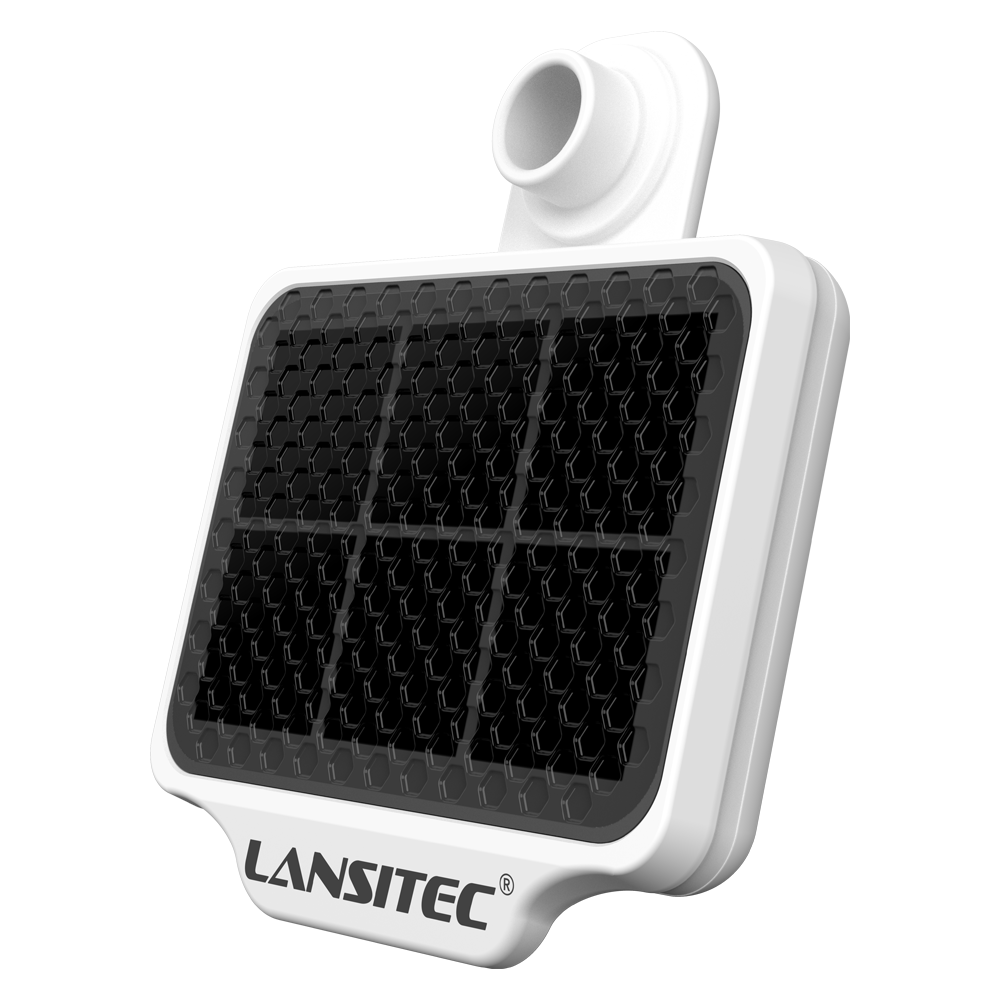
The Lansitec Livestock Tracking Solution gives farmers more visibility into each animal’s location and daily activity. Solar-powered tracking tags collect position and movement information, while optional Bluetooth infrastructure can record visits to important areas such as water troughs, feed lines, and milking stations.
Lansitec supplies the tracking hardware. Resellers and solution partners can connect it to the network and livestock management software that best fits each farm.
How Livestock Tracking Helps Farmers Manage Cattle
How GPS Livestock Tracking Helps Find Missing Cattle
View the animal’s reported location and reduce the time spent searching large fields. A built-in geofence can also generate an event when a cow leaves a defined grazing area.
How Cattle Activity Tracking Can Reveal Changes in Normal Behavior
Daily movement distance, activity data, and optional ear temperature readings can help reveal changes in an animal’s normal pattern. A cow that moves much less than usual, separates from the herd, or produces an unusual temperature reading may need to be checked.
These measurements support earlier attention, but they do not diagnose illness, injury, or pregnancy.
How to Track Cattle Visits to Water and Feed Areas
The tracking tag broadcasts a Bluetooth identification signal. Receivers installed near water troughs or feed lines can record when each animal enters the area.
This helps farmers identify cattle that have not visited an expected location for an unusual length of time. It records presence near the water or feed point, not the act of drinking or eating itself.
How to Track Cattle at Milking Stations
Gateway Bluetooth AoA installed around milking stations can identify which cow enters, which station it visits, and how long it remains there. This information can support attendance and dwell-time records when connected to the farm’s chosen management application.
The tracking system records presence at the station. Confirmation that milking was completed may require integration with the milking equipment or management system.
How Does a Livestock Tracking System Work?
Each cow wears a rugged, lightweight tracking tag. Outdoors, the tag uses satellite positioning to determine the animal’s location. It also measures movement and calculates daily activity.
The tag sends this information through one of three connectivity options:
- LoRaWAN for farms using their own long-range gateway infrastructure
- Cat-1 for areas with reliable cellular coverage
- LoRaWAN con NTN connectivity for remote areas where terrestrial coverage is limited
The tag also broadcasts Bluetooth signals. Fixed Bluetooth receivers can use these signals to record visits to selected farm areas. Where more precise monitoring is needed, Gateway Bluetooth AoA can track movement through a defined zone such as a milking station.
The reseller or system integrator connects the hardware to the selected network, application, and alerting system. Lansitec does not provide the SaaS platform.
Key Features of a Livestock Tracking System
Configurable GPS Location Reporting for Cattle
Choose how often the tag determines and reports its position. Shorter intervals provide more frequent updates, while longer intervals reduce energy use.
Livestock Geofencing for Grazing Areas
Define an allowed grazing area and receive an event when an animal moves outside it. Geofence settings can be adjusted through the configuration application or a supported downlink command.
Multi-GNSS Tracking for Livestock
The tag supports BeiDou, Galileo, GPS, GLONASS, QZSS, and compatible SBAS services, including WAAS, EGNOS, GAGAN, and MSAS.
Cattle Activity and Movement Tracking
Movement data can be used to calculate daily distance and highlight changes in the animal’s normal activity pattern.
Ear Temperature Monitoring for Livestock Health Checks
Ear temperature data can provide another indication that an animal should be inspected. Temperature readings should always be interpreted together with movement, location, and an in-person health assessment.
Solar-Powered Livestock Tracking Tags
The integrated solar panel helps recharge the battery outdoors and reduces the need to remove tags for routine charging.
Bluetooth Checkpoints for Water, Feed, and Farm Areas
The tag broadcasts a configurable Bluetooth signal that receivers can detect near water troughs, feed lines, gates, and other important locations.
Bluetooth AoA Tracking for Milking Stations
Compatible Bluetooth AoA infrastructure can provide more precise zone-level positioning around milking stations and other controlled areas.
IP66-Rated Livestock Tracking Tag for Outdoor Use
The compact, IP66-rated enclosure is designed for outdoor use and safe attachment to livestock.



 English
  ไทย
ไทย  한국어
한국어  Français
  Deutsch
  Español
  日本語
日本語  العربية
  Italiano
  Português