

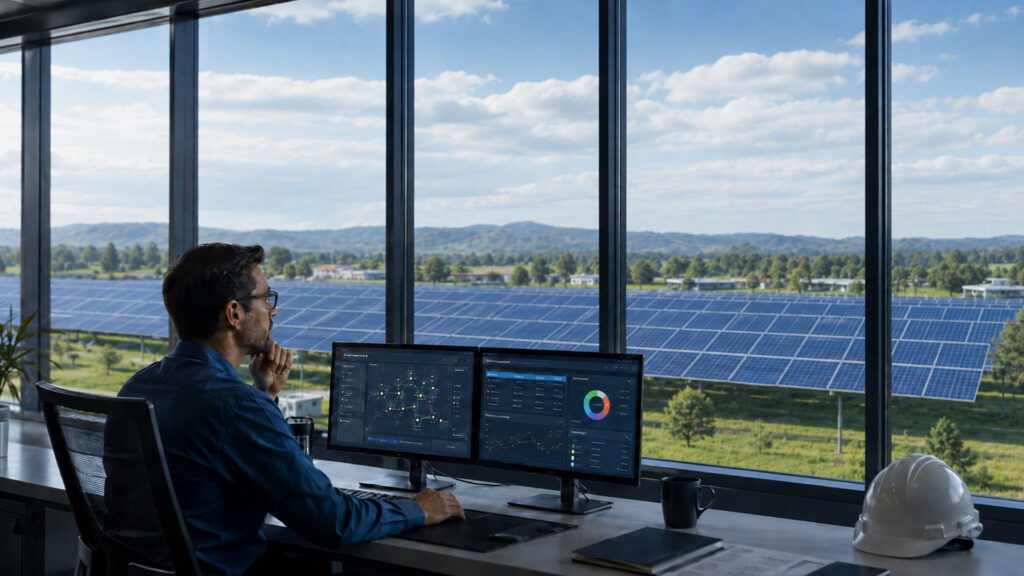
Data is no longer a secondary output of equipment operation in modern energy systems – this is a core operational asset. This data becomes essential not only for monitoring but for decision-making, automation, and long-term planning. At the same time, the architecture behind how this data is collected, transmitted, and stored is often taken for granted. Many monitoring solutions are designed around vendor-controlled cloud environments, where data is automatically sent, processed, and stored outside of the operator’s direct control. While this approach simplifies deployment, it introduces structural limitations that become increasingly visible over time. The key issue is not whether cloud-based monitoring works – it does. The issue is that in many implementations, organizations do not fully control how their own operational data is handled. This creates dependencies that can affect flexibility, integration, and long-term system ownership.
The Problem with Cloud-dependent Monitoring Models
Most energy monitoring systems are designed around a centralized model in which data collection and processing are tightly coupled within a single-vendor environment. In this setup, controllers or data loggers send telemetry directly to a predefined cloud platform, where all subsequent operations – storage, visualization, and analytics – take place. This architecture is optimized for ease of use. It allows for quick deployment, standardized dashboards, and minimal setup effort. However, this simplicity comes from embedding critical system behavior into a closed ecosystem. As a result, organizations are not designing their data architecture – they are adopting one.
Why data control matters in modern energy monitoring systems Data is no longer a secondary output of equipment operation in modern energy systems – this is a core operational asset. This data becomes essential not only for monitoring but for decision-making, automation, and long-term planning. At the same time, the architecture behind how this data is collected, transmitted, and stored is often taken for granted. Many monitoring solutions are designed around vendor-controlled cloud environments, where data is automatically sent, processed, and stored outside of the operator’s direct control. While this approach simplifies deployment, it introduces structural limitations that become increasingly visible over time. The key issue is not whether cloud-based monitoring works – it does. The issue is that in many implementations, organizations do not fully control how their own operational data is handled. This creates dependencies that can affect flexibility, integration, and long-term system ownership. The problem with cloud-dependent monitoring models Most energy monitoring systems are designed around a centralized model in which data collection and processing are tightly coupled within a single-vendor environment. In this setup, controllers or data loggers send telemetry directly to a predefined cloud platform, where all subsequent operations – storage, visualization, and analytics – take place. This architecture is optimized for ease of use. It allows for quick deployment, standardized dashboards, and minimal setup effort. However, this simplicity comes from embedding critical system behavior into a closed ecosystem. As a result, organizations are not designing their data architecture – they are adopting one. But this approach reveals its limitations. Integration with internal systems may require indirect methods or additional middleware. Access to raw data may be limited by API restrictions. Changes in infrastructure strategy may be constrained by how tightly data flows are bound to a specific platform. Over time, this creates an architectural dependency rather than a temporary convenience. The monitoring layer becomes inseparable from the vendor’s cloud, making it difficult to adapt the system without significant reconfiguration. What initially appears to be an efficient deployment model gradually becomes a limiting factor for system evolution.
What Data Dependency Actually Impacts
The consequences of cloud-dependent architectures extend beyond system design and become visible at the operational and business levels. These impacts often emerge gradually, particularly as deployments scale or integration requirements become more complex.
The most common areas affected include:
- Limited control over where and how data is stored and processed;
- Restricted integration with internal analytics platforms or enterprise systems;
- Dependence on externally defined pricing models and service conditions;
- Reduced visibility into data lifecycle, including retention and access policies;
- Increased complexity when migrating to alternative platforms or architectures;
- Misalignment with internal data governance or compliance requirements;
- Challenges in scaling monitoring across diverse equipment and multi-site environments.
These factors influence not only technical flexibility but also cost predictability and long-term system sustainability. In large-scale deployments, where monitoring systems must integrate with broader digital infrastructure, such limitations can directly affect operational efficiency. What begins as a convenient, ready-to-use solution may evolve into a structural constraint if data ownership and control are not clearly established from the outset.
Moving Toward Data Sovereignty in Energy Systems
In response to these challenges, there is a growing shift toward architectures that prioritize data sovereignty. This approach gives organizations full control over how their data is routed, stored, and used, rather than relying on predefined vendor-managed workflows. Importantly, this shift does not eliminate the use of cloud technologies. Instead, it reframes them as one of several possible components within a broader system. Data can be directed to public cloud platforms, private infrastructure, or on-premises environments, depending on operational requirements. The key difference is that this choice is made by the system owner, not enforced by the device or platform. This model is typically built on open standards and modular design principles. Interoperable communication protocols allow different components of the system to interact without being locked into a single ecosystem. As a result, organizations can design monitoring solutions that evolve alongside their infrastructure, rather than being constrained by it.
The Role of Edge Controllers in Data Control
A critical component in enabling this level of control is the edge controller, which operates as an independent gateway between physical equipment and digital infrastructure. Unlike traditional data loggers that forward telemetry to a fixed destination, edge controllers introduce a layer that defines and manages data flow. By processing data locally and transmitting it according to configurable rules, these devices enable organizations to decouple data collection from data storage and analytics. This separation is essential for building flexible and scalable monitoring systems.
A typical edge-based architecture introduces several key capabilities:
- Direct data acquisition from equipment through standardized interfaces.
- Local processing and normalization of telemetry before transmission.
- Secure communication channels that protect data in transit.
- Configurable routing of data to multiple destinations depending on system requirements.
- Independence from specific platforms, enabling integration with existing IT environments.
This approach transforms the controller into an active architectural component rather than a passive data collector. It becomes the point at which decisions about data flow are made, ensuring that monitoring systems remain adaptable as requirements change.
Example: Edge Controller as A Transparent Data Gateway
A practical illustration of this approach is modern edge solutions designed to prioritize transparency and flexibility. These systems demonstrate how data control can be implemented without sacrificing usability or deployment efficiency. For example, the KaaIoT Universal Energy Controller, which is built around the principle that organizations should retain full control over both their devices and the data they generate. Rather than enforcing a predefined data path, it allows telemetry to be directed according to user-defined requirements.
In this model, the controller connects directly to energy equipment and serves as a neutral intermediary that structures and transmits data. The destination of that data is not fixed. Instead, it can be routed to different environments depending on operational needs:
- Public cloud platforms;
- Private or dedicated infrastructure;
- Self-hosted deployments;
- External systems via standard integration mechanisms.
This flexibility enables organizations to integrate monitoring into their existing digital ecosystems without restructuring their infrastructure around a specific vendor. Data can be analyzed, stored, and managed using tools that align with internal processes and policies. At the same time, practical considerations are preserved. Automated device discovery, simplified configuration interfaces, and remote update capabilities reduce deployment complexity. This ensures that increased data control does not come at the cost of usability. The combination of open architecture with operational simplicity demonstrates how monitoring systems can evolve beyond platform-bound designs and support more transparent and adaptable data strategies.
Final Words
Energy systems are becoming increasingly interconnected, which is why the role of data extends far beyond monitoring and into the core of operational decision-making. The way this data is collected, routed, and managed directly influences the system’s flexibility and resilience. Cloud-based monitoring models introduce architectural constraints that may limit long-term adaptability. These constraints become more apparent as systems grow, integrations expand, and data governance requirements become more stringent. The transition toward data sovereignty reflects a broader shift in the design of energy infrastructure. Ultimately, effective energy monitoring is no longer defined solely by the ability to collect and visualize data. It is defined by the ability to control that data – to determine where it goes, how it is used, and how it supports evolving operational needs. Systems built with this level of control are better positioned to adapt, integrate, and scale in a rapidly changing energy landscape.



 English
  ไทย
ไทย  한국어
한국어  Français
  Deutsch
  Español
  日本語
日本語  العربية
  Italiano
  Português