
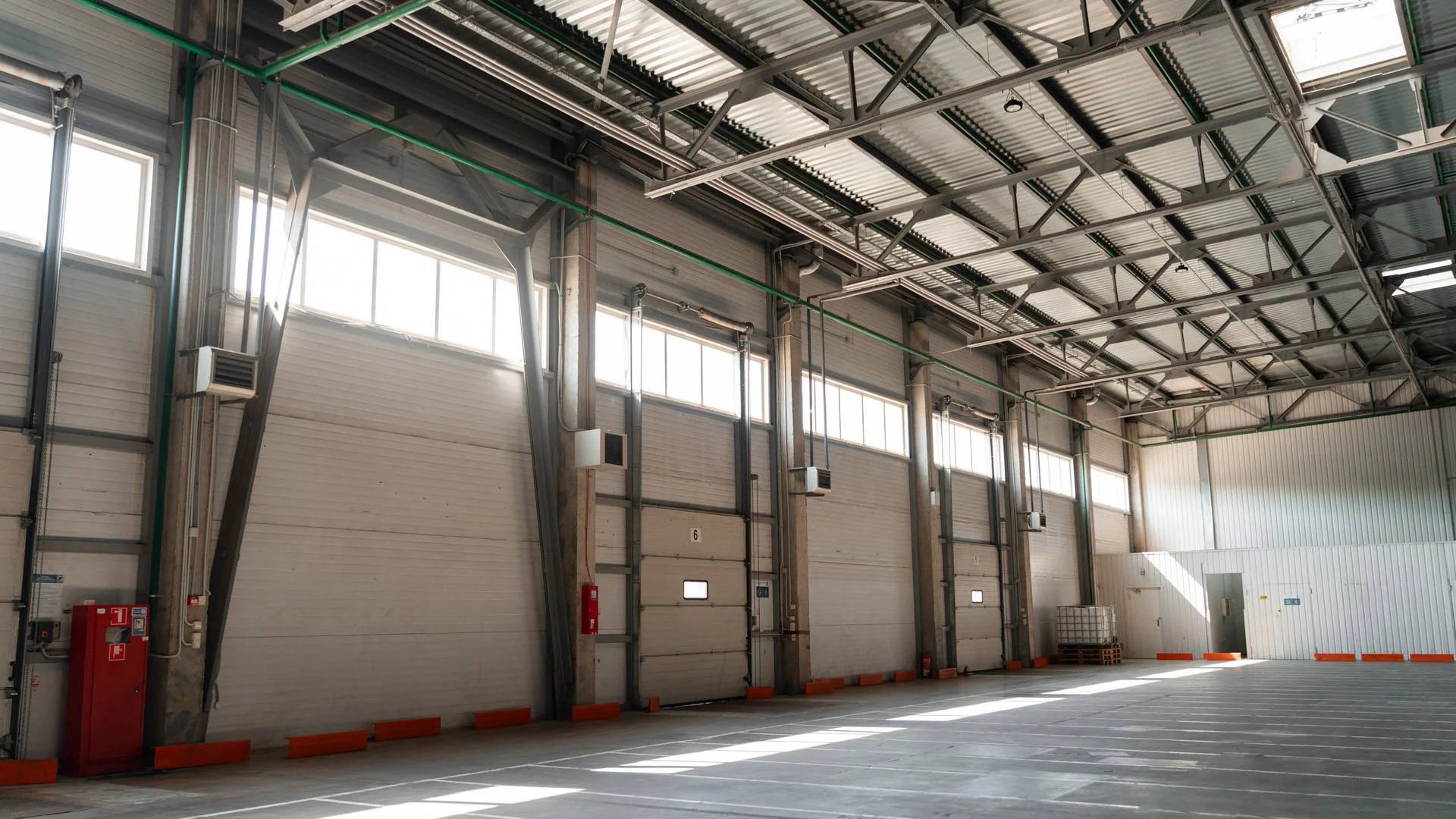
Client: SAMKING Solar Pumps Manufacturing Plant
Industry: Heavy Machinery & Industrial Manufacturing
SAMKING Background
SAMKING operates a sprawling 800,000 sq. ft. manufacturing facility, housing automated assembly lines, CNC machines, and overhead cranes. With 200+ workers and 50+ heavy machines operating in close proximity, the plant faced critical safety challenges:
- Frequent near-miss incidents between workers and moving machinery.
- Unauthorized entries into restricted high-risk zones (e.g., robotic welding areas).
- Rising insurance premiums due to workplace injuries and OSHA violations.
Existing infrared sensors and manual signage failed to provide real-time alerts, leading to three worker injuries in 2023.
Challenge
Collision Risks: Workers often entered blind spots of cranes and forklifts, resulting in accidents.
Restricted Area Breaches: Unauthorized personnel entered hazardous zones, risking electrocution or equipment damage.
System Limitations: Legacy proximity sensors (2m accuracy) could not distinguish between static obstacles and humans.
Implementation
Collision Risks: Workers often entered blind spots of cranes and forklifts, resulting in accidents.
Restricted Area Breaches: Unauthorized personnel entered hazardous zones, risking electrocution or equipment damage.
System Limitations: Legacy proximity sensors (2m accuracy) could not distinguish between static obstacles and humans.
Solution: Lansitec’s Multi-Use UWB-LoRaWAN Safety Ecosystem
SAMKING deployed Lansitec’s UWB-anchor and UWB Badge Tracker across three key applications:
1. Heavy Machinery Anti-Collision
Customizable Danger Zones:
- 1–5 meters around moving machinery triggered alarms (beeping + LED flashes) on both the UWB-anchor and the worker’s badge.
- 5–10 meters for slow-moving cranes, giving operators advanced warnings.
2. Restricted Area Monitoring
UWB-anchors installed at entry points to hazardous zones (e.g., high-voltage panels, chemical storage).
Unauthorized personnel entering these zones triggered:
- Local Alerts: Flashing LEDs and alarms on the anchor.
- Central Alerts: The anchor will send all the notifications to the APP via LoRaWAN.
3. System-Wide Benefits
- Full Battery-Powered System: Anchors and badges are battery-powered, with anchors lasting for up to 5 years and badges lasting 6 months per charge.
- Low Power, High Scalability: The LoRaWAN gateway supports 500+ devices
- Interference Resistance: UWB’s 5GHz–7.5GHz bandwidth avoided clashes with Wi-Fi/Bluetooth.
- Data Logging: Incident reports (time, location, personnel) were integrated into Samking’s safety compliance software.
Implementation
- Phase 1 (3 weeks): Installed 80 UWB-anchors on machinery and restricted zones; distributed 250 badge trackers.
- Phase 2 (2 weeks): Calibrated danger zones using Samking’s cloud-based software (e.g., 2m radius for robotic arms, 8m for crane paths).
- Training: Workers received briefings on badge protocols while machine operators practiced emergency stop procedures during alerts.
Challenges Overcome:
- High Noise Environments: UWB’s short pulses excelled in metal-dense areas where traditional RF failed.
- Dynamic Workflows: Adjustable zones accommodated shift changes (e.g., expanding danger area during maintenance).
Results
90% Reduction in Near-Miss Incidents involving heavy machinery within 4 months.
Zero Restricted Zone Breaches post-deployment, compared to 8 incidents quarterly in 2023.
Insurance Savings: 25% lower premiums due to improved OSHA compliance.
Operational Efficiency: 15% faster machine throughput as operators worked confidently with real-time alerts.
Worker Feedback:
“The anchor alarms make me hyper-aware of my surroundings. I feel safer working when the forklift is near the workers now.”
— Shu LEE, Forklift driver
Management Insight:
“Lansitec’s system didn’t just prevent accidents—it gave us data to redesign high-risk workflows.”
— Zhen Wang, Plant Safety Director
Conclusion
SAMKING’s deployment highlights Lansitec’s versatility in addressing industrial safety challenges, from anti-collision to access control. By combining UWB’s pinpoint accuracy with LoRaWAN’s robust connectivity, the solution creates a proactive safety net adaptable to diverse environments.
Future Expansion, Samking plans to:
- Integrate UWB-anchors with emergency shutdown systems for automated machine halting.
- Deploy wearable “smart helmets” with embedded UWB trackers for high-risk roles.
Explore Lansitec’s Safety Solutions:
Lansitec—Engineering Safer Workplaces Through Innovation.

 English
  ไทย
ไทย  한국어
한국어  Français
  Deutsch
  Español
  日本語
日本語  العربية
  Italiano
  Português