
We keep seeing the same pattern in RFQs: teams start with “We need 10 cm accuracy,” then realize they actually need “the right action, at the right moment.” Sometimes that means centimeter-level RTLS. Sometimes it means a clean zone event and a fast alert. The trick is choosing the simplest tech that still makes money.
Ultra-Wideband has matured enough that you can deploy it like a system, not a science project. But you still need a decision framework. Otherwise, you’ll buy precision you never use, or worse, miss the one workflow where 10 cm saves real hours and real risk.
UWB is finally moving from “cool demo” to “procurement line item”. Automotive digital keys are one big proof point, with certification programs expanding to cover both Bluetooth LE and UWB and rapidly increasing the number of certified products. The standards side keeps moving too, with the FiRa Consortium explicitly planning to incorporate forthcoming IEEE 802.15.4ab enhancements into future specs. (1)
In this guide, we’ll walk through a practical way to decide when UWB delivers payback, when it’s overkill, and how to map that to an anchor-based architecture like Lansitec’s LoRaWAN + UWB approach.
UWB Ranging vs Positioning Accuracy: What 10 cm Really Means
Vendors love to say “10 cm.” and buyers love to repeat it. Reality sits in the middle.
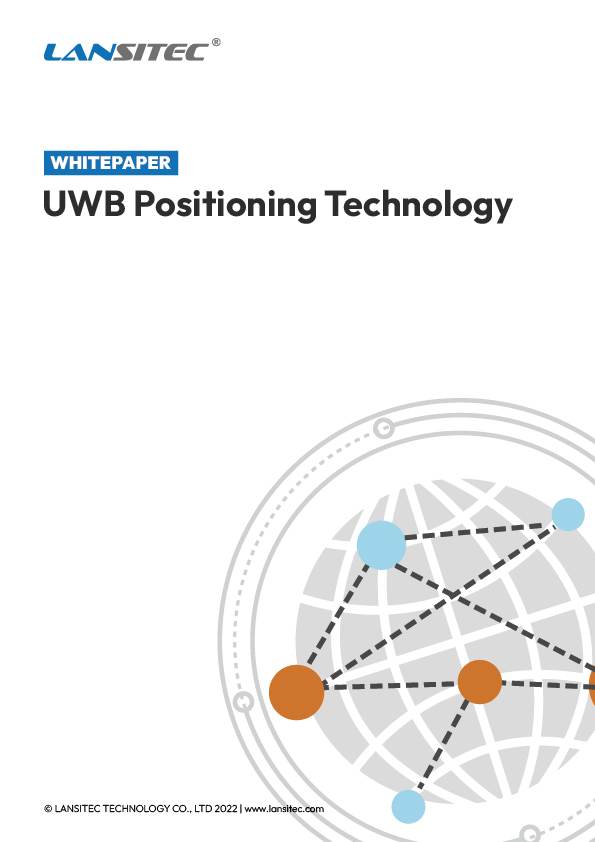
In UWB systems, you typically measure distance (ranging) from a tracker to multiple anchors, then compute positioning from those distances. In clean conditions, ranging can hit about 10 cm, but overall positioning accuracy depends on environment, synchronization, multipath, tag orientation, and layout. Lansitec’s own UWB whitepaper spells it out clearly: 10 cm positioning is achievable in an ideal lab environment; real deployments commonly land closer to ~30 cm because disturbance and system factors dominate. (2)
If your business case collapses unless you get a guaranteed 10 cm everywhere, you don’t need a vendor. You need a rethink.
When UWB 10 cm Accuracy Delivers Real ROI
Here are the scenarios where we see UWB earn ROI without heroic justification.
High-mix Manufacturing and Kitting Mistakes
When operators pick the wrong part from the wrong rack, the cost isn’t the part. It’s the cascade: rework, delays, QA churn.
UWB’s value here is boring and beautiful: it makes “wrong location” undeniable, even in dense shelves and clutter. Lansitec positions its UWB anchor + tracker systems for industrial environments with rugged enclosures and long operating ranges to support these layouts.
Tool Control in Maintenance and Shutdown Events
Shutdowns (or aircraft/rail maintenance windows) punish “good enough.” If a critical tool sits 2 meters away, that’s still “lost” when the clock is running.
UWB doesn’t just locate. It reduces search behavior. That’s often the biggest hidden ROI.
Micro-geofencing for Safety and Compliance
In real safety programs, the boundary is the 2-meter zone around a hazard, moving equipment, or restricted cabinet.
Lansitec’s safety-focused positioning materials compare UWB with other approaches and specifically frame UWB as a fit where high precision enables real-time alarms and compliance workflows. (3)
AGV, Rrobots, and Collision Avoidance Workflows
If you need relative distance and tight indoor navigation, UWB fits naturally because you’re already thinking in geometry.
The FiRa ecosystem continues to push UWB forward for precise and secure ranging and broader deployment across use cases, building on IEEE 802.15.4z and evolving specs. (1)
UWB vs BLE vs AoA: Indoor Positioning Comparison Guide
| Requirement you actually have | Typical best-fit tech | Why |
|---|---|---|
| Which bin / which workstation / which side of a line | UWB | Tight spatial decisions need tight spatial truth. Expect ideal 10 cm in lab, closer to ~30 cm in real sites. |
| Near-real-time safety boundary alarms | UWB or BLE AoA | UWB excels in dense spaces; AoA can work but needs careful installsadeoffs. |
| Room-level presence, wide-area coverage, lower cost | BLE + gateway + LoRaWAN backhaul | Great for in/out and zone logic. |
| Basic asset finding, meter-level is fine | BLE RSSI / hybrid | Cheapest path when precision doesn’t drive action. |
Bluetooth has also matured in the better-than-RSSI direction. Bluetooth SIG describes Bluetooth Direction Finding as enabling devices to determine signal direction (AoA/AoD), supporting high-accuracy indoor location services and even centimeter-level location accuracy for some positioning designs. (4)
UWB Anchor Architecture for Industrial RTLS
Here’s the pattern we see teams prefer: use UWB for ranging, then use long-range backhaul for the data. Lansitec’s catalog describes a UWB anchor that combines UWB positioning with LoRaWAN connectivity for backhaul, plus time synchronization between anchors and server-side position calculation.
Quick capability snapshot (from the catalog):
- UWB Anchor (Part No. 100-000U1): LoRaWAN + UWB + Bluetooth, IP66 enclosure, receiving range up to 23 m, supports up to 512 trackers, powered by 38,000 mAh (19,000 mAh ×2).
- Battery life depends heavily on tracker density and reporting. The catalog provides an example table showing anchor lifetime scaling with number of trackers (for example, “18 years / 10 years / 4.8 years” at different tracker counts). Treat it as planning guidance, then confirm with your duty cycle.
- Trackers in the same family include UWB Container Tracker (100-000U2, IP68, 8,000 mAh), UWB Badge Tracker (100-000U3, 600 mAh rechargeable), and UWB Asset Management Tracker (100-000U4, IP66, 8,000 mAh).
One detail to like here: the system design encourages shared infrastructure. You can deploy anchors once, then mix tracker form factors (badge, container, asset) as the project expands.
How to Decide If You Need UWB Indoor Positioning
1) What decision do you automate with location?
Binary decisions (present/not present, in/out) rarely need UWB.
Discrete selection (which bin, which cart, which dock door) often does.
2) What’s the cost of being wrong?
If a wrong location causes a safety incident, a line stop, or a missed SLA, UWB starts to look “cheap”.
3) How nasty is the RF environment?
UWB tolerates multipath better than narrowband radios, but metal and NLoS still exist. Expect performance to vary, then validate with a pilot. [3]
4) How many things move at once?
High density forces discipline: update intervals, reporting strategy, and how you backhaul the measurements.
5) What’s your install tolerance?
Ceiling work, power availability, and calibration effort matter more than people admit… especially on brownfield sites.
6) What system do you integrate into?
WMS, MES, CMMS, safety systems. Location only matters if it triggers something downstream.
Frequently Asked Questions
About UWB Indoor Positioning Accuracy
Do I really get 10 cm accuracy everywhere?
Not everywhere. Real sites include NLoS, metal, and moving people. Research often frames UWB’s key benefit as around 10 cm tracking with an acceptable error around 30 cm in difficult indoor environments, but you still need a site-specific pilot.
Should I choose Bluetooth AoA instead of UWB?
Choose it when you want high accuracy but can tolerate more infrastructure complexity in antenna arrays and calibration. Bluetooth Direction Finding supports AoA/AoD methods and positions the technology for high-accuracy indoor services, including designs targeting centimeter-level accuracy.
Why does standards maturity matter to buyers?
Because it lowers ecosystem risk. UWB is not frozen. FiRa Consortium is actively evolving specs, including plans to incorporate forthcoming IEEE 802.15.4ab enhancements into future work, aiming to improve range, reliability, and performance. Pair that with expanding certification programs in adjacent ecosystems like digital keys, and UWB looks less like a niche bet.
References and further readings:
- FiRa Consortium press release on integrating IEEE 802.15.4ab advancements
- Lansitec “UWB Positioning Technology Whitepaper”
- Lansitec “Emergency Safety & Production Management Intelligent accurate-tracking solution”
- Bluetooth SIG overview: Bluetooth Direction Finding, AoA/AoD methods, and positioning claims

 English
  ไทย
ไทย  한국어
한국어  Français
  Deutsch
  Español
  日本語
日本語  العربية
  Italiano
  Português